


Using relevant clinical data to inform clinical and operational decisions at each stage of an ADHD workflow is an example of a data-driven approach.
Clinicians may combine objective technology with subjective measures to use data strategically. This helps deliver timely, consistent, and evidence-led care.
Let’s explore what data-driven ADHD care looks like in practice, across a clinical workflow.
Disclaimer – The step-by-step guide in this blog is provided for informational purposes only. It is not intended as an implementation guide and should be reviewed alongside relevant guidance, local policies, and professional judgment. Reader discretion is advised.
What makes an ADHD clinic truly data-driven?
All clinics will collect data in some form, but what sets a data-driven clinic apart is the strategic collection and application of data from multiple sources and settings. A data-driven workflow means collecting data proportionately, appropriately, and effectively. Then, using that data to aid diagnostic decision-making.
Data is collected and used consistently
Following a structured approach to data collection, helps gather information systematically. This supports a more consistent clinical process and patient experience while still allowing assessments to reflect individual needs.
Any data collected serves a clear clinical purpose
Data collection must be intentional, directly informing patient care at one or more stages of the ADHD workflow. Collecting unnecessary data may lead to added admin burden or patient dissatisfaction.
Data collection processes should be accessible
Patients should be able to receive high-quality ADHD care, regardless of where they live. Remote care delivery with telehealth, or incorporating tools like QbCheck helps make care delivery accessible.
Data informs, but does not replace clinical judgment
A data-driven clinic uses information responsibly. For example, an objective test is not intended as a standalone ADHD assessment tool. Instead, clinicians should use it alongside subjective measures such as rating scales, developmental history, and clinical interviews to support their judgment.
Data drives workflow and operational improvements
Modern clinics also use data to monitor workflow performance, identify variation between clinicians or locations, and find opportunities for improvement. This may include reviewing waiting times, repeated appointments, or operational delays, and then acting on the findings to improve ADHD services.
How to embed data across the ADHD care workflow: a guide for clinicians
Data serves a different purpose at each stage of the clinical workflow. Collecting the right data at the right time gives clinicians an evidence base on which to act while supporting a more streamlined patient journey.
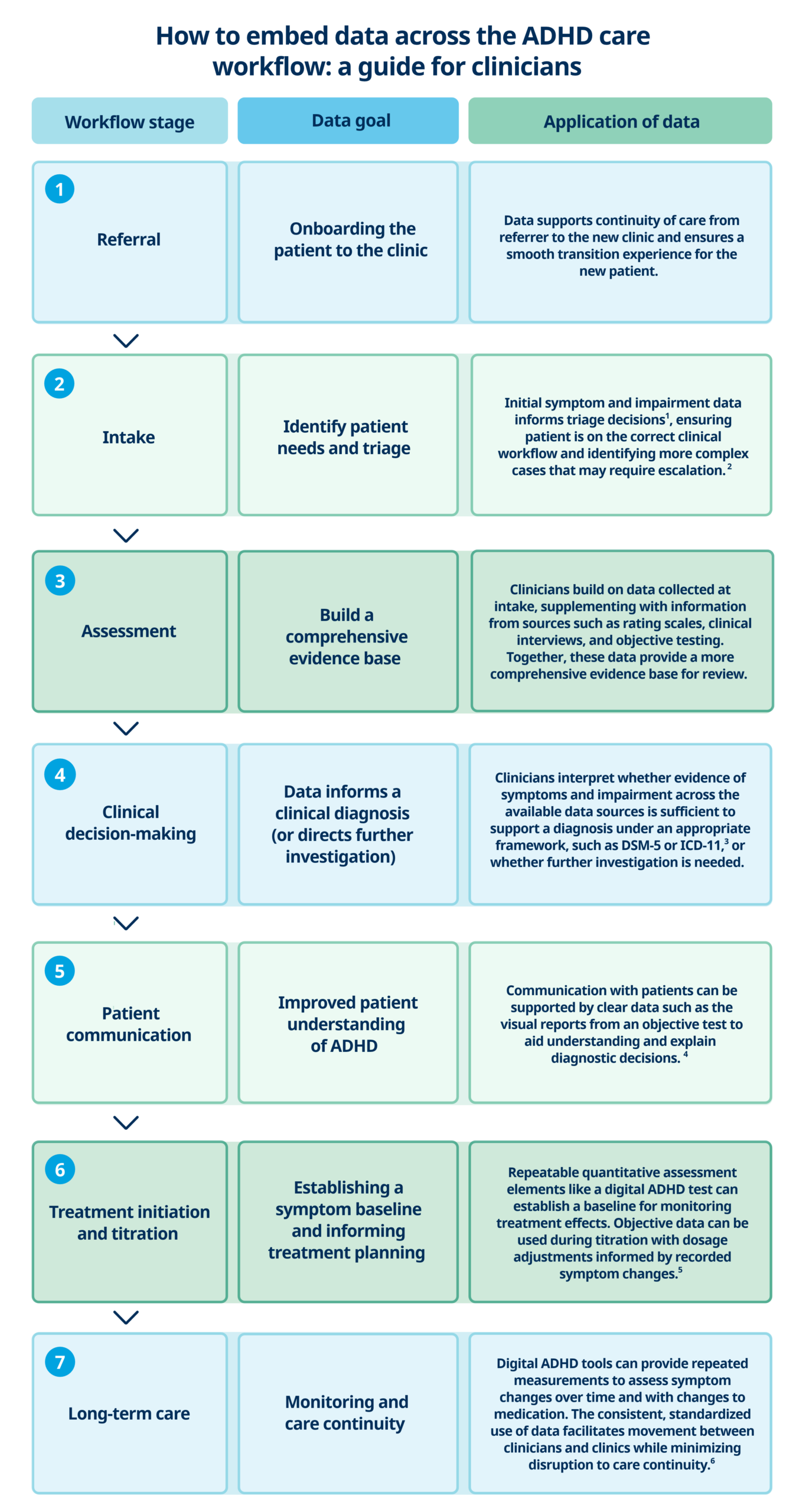
Sources informing infographic:
1. Reducing ADHD bottlenecks through smarter triage
2. How to standardize ADHD assessments across a growing clinical team
3. ADHD diagnosis guidelines: Exploring DSM-5, ICD, NICE, and clinical best practices
4. The ADHD test that does the talking for you: communicate effectively with your patients
5. Sanyal, et al., (2024) Utilizing Remote Objective ADHD Testing to Monitor Symptom Improvement Following Medication Treatment
4. Support ADHD patients across life transitions: Clinician tips
Data-driven ADHD care in clinical practice
Adopting a data-driven approach and incorporating QbCheck into its ADHD workflow helped Texas-based clinic, Legion Health, develop a more standardized and scalable model of care.
Before objective testing, confidence in ADHD diagnoses was a key concern, and patients could find the process difficult to understand. The clinic lacked clear, objective data, while clinicians followed different approaches across the ADHD assessment workflow.
Since moving to a data-driven workflow with QbCheck as a core component of its ADHD diagnosis and treatment process, the clinic has reported the following benefits:
- ADHD diagnoses can now be reached longitudinally over two appointments following a complete data review
- The clinic achieved 12-fold growth as part of a broader transformation in service delivery, including the adoption of QbCheck
- Patients within its ADHD model have higher retention than its overall patient population
- Clinicians report greater confidence in their decision-making
Here's how you can build a data-driven ADHD clinic
A truly data-driven clinic does more than collect information or introduce new evidence-based technologies. It develops a standardized workflow in which relevant data is collected strategically and consistently, with a clear purpose at every stage of the patient journey. By following this approach, data actively supports ADHD assessment, clinical decision-making, patient communication, ongoing monitoring, and service improvement.
Use our workflow consistency scorecard to evaluate your clinic against evidence-based criteria, identify opportunities to reduce variation, and take practical steps toward a more consistent, data-driven approach.