Qbtech Product Development
Statement on Accessibility

Purpose
At Qbtech, accessibility is a core part of how we design, maintain, and deliver digital health products.
This statement defines how accessibility guides product development decisions and why it is essential for patient experience, clinical quality, and trust.
Accessibility as a product development principle
Many who live with ADHD may also experience dyslexia, autism, reading difficulties, sensory sensitivity, or reduced cognitive energy. Because of this, accessibility is treated as a product development principle, not a final-stage requirement.
In practice, this means that Qbtech prioritizes:
- Reducing cognitive load wherever possible
- Designing predictable, consistent, and calm interactions
- Favoring clarity over complexity
- Supporting patients in completing assessments independently and with confidence
Accessible and inclusive design helps patients conserve mental energy and focus on the assessment itself. This directly improves patient experience and supports reliable clinical outcomes.

Accessibility and clinical quality
At Qbtech, accessibility is evaluated in relation to assessment validity and patient safety. If patients struggle to understand instructions, or have trouble navigating the test, their results risk reflecting interface friction rather than clinical reality.
For this reason, patient experience is considered part of clinical quality. Clear, accessible interactions help ensure that assessments measure ADHD symptoms and performance rather than a patient’s ability to cope with the product.
Accessibility supports:
- Patient confidence
- Assessment completion
- Consistency of patient input
- Trust in clinical data
Accessibility standards and transparency
All Qbtech patient-facing interfaces are designed to meet WCAG 2.1 level AA requirements. These standards serve as the primary accessibility benchmark across products and platforms.
Accessibility requirements are included in review and validation processes, and known limitations are documented and communicated transparently. Updates and new releases are assessed to ensure that accessibility is preserved over time.
Being open about both capabilities and limitations is part of responsible healthcare design and helps set clear expectations for patients and clinicians.
Accessibility in practice
Accessibility at Qbtech is expressed through concrete product and engineering decisions.
Design and interaction
- Interfaces are simple, calm, and distraction-free
- Instructions are clear and written in plain language
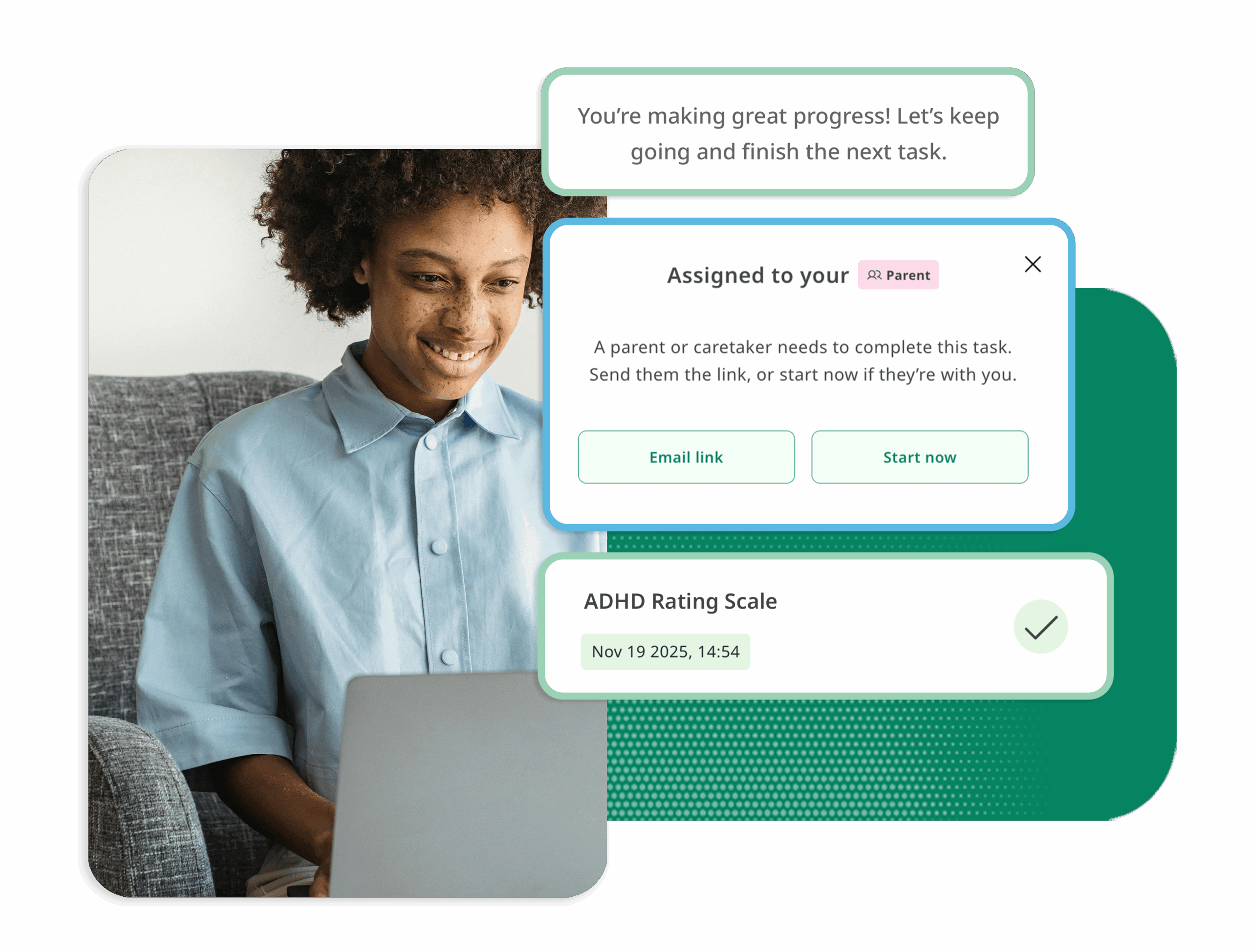
- Task flows are predictable and supported by progress indicators
- Choices are minimized to reduce decision fatigue
Engineering and development
- Accessibility is implemented as part of core functionality, not added afterward
- Code is written to be semantic and robust, using native platform standards wherever possible
- Native accessibility features of browsers and operating systems are relied on as a foundation
- Timing, input handling, focus management, and state changes are treated as accessibility-critical concerns
- Accessibility is maintained across the product lifecycle and reviewed when changes are introduced
These practices help ensure that accessibility is durable, maintainable, and aligned with both patient needs and clinical requirements.
Looking ahead
Accessibility is how Qbtech designs better ADHD care today. It is also how we help build the future of ADHD care delivery.
Every patient should be able to complete Qb testing calmly, comfortably, and independently. By continuously improving our tools, patient-facing interfaces, and platforms, we work to ensure that more people can successfully complete ADHD assessments with confidence.
Every refinement aims to reduce stress, conserve patient energy, and strengthen clinical confidence. It is the standard we uphold, and build towards.