


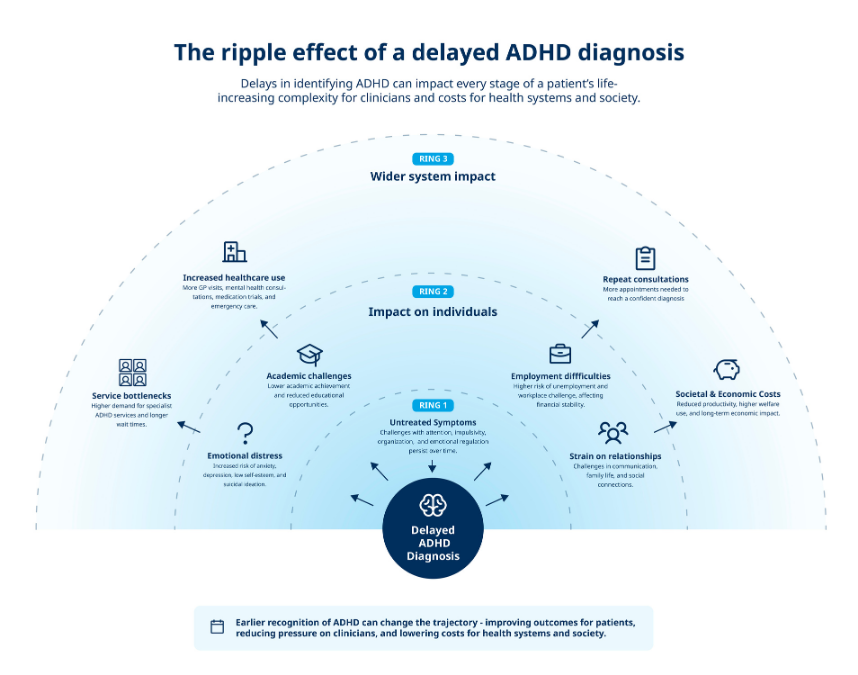
Delays in identifying ADHD can affect far more than the timing of a diagnosis. They can influence your patient outcomes, your clinical operations, and impact broader healthcare systems.
Let's explore the hidden costs of a delayed ADHD diagnosis and how you can deliver more efficient, timely, and consistent care to patients.
The impact on clinicians and ADHD services from delayed diagnosis
Delays to ADHD diagnosis can also impact your work as a clinician, making ADHD harder to assess and diagnose.
More complex ADHD presentations
Patients who live with untreated ADHD for a long time may develop coping mechanisms and masking strategies. These can make diagnosis complex and increase uncertainty during assessment.
Longer assessment journeys
In the year before receiving an ADHD diagnosis, patients often seek medical help for other psychiatric problems. The most common are depression, bipolar disorder, anxiety, and substance misuse. Patients may go through multiple referrals and see different team members before the correct diagnosis is made.
Societal and healthcare system costs linked to missed ADHD
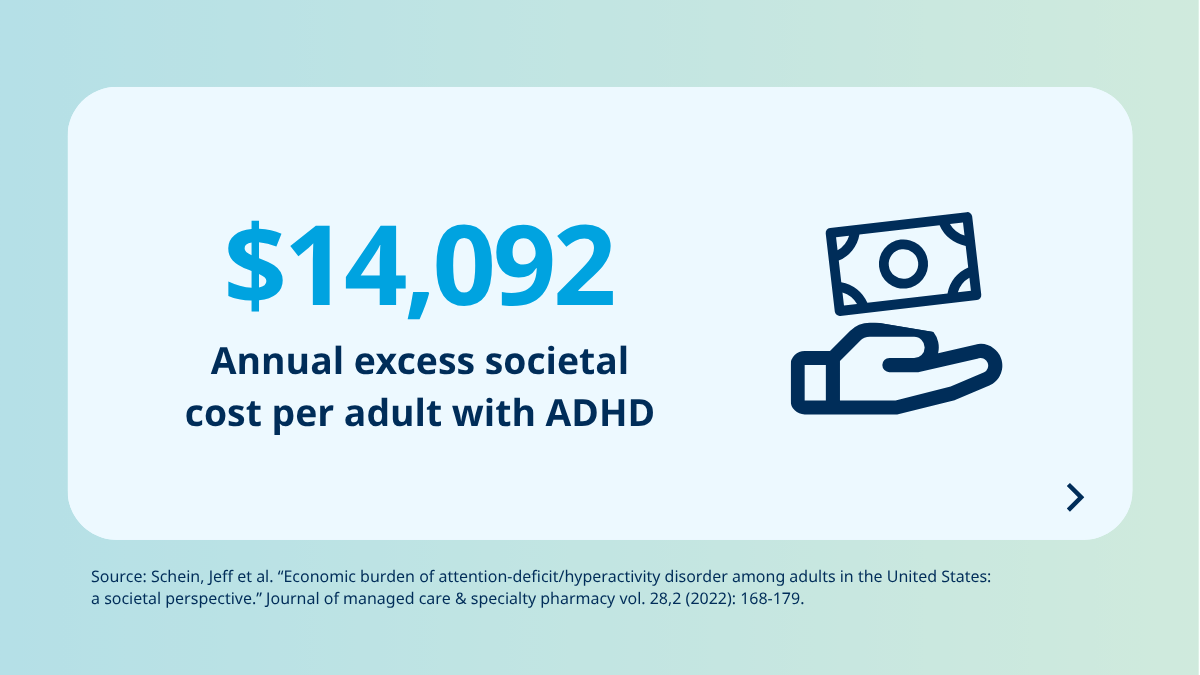
The annual excess cost of ADHD to society has been estimated at $14,092 per adult in the US. This cost is distributed across unemployment, productivity loss, and excess healthcare use. In the UK, the annual societal cost of untreated ADHD is estimated at roughly £17 billion per year. This breaks down to an average of over £18,000 in excess costs per adult compared to their neurotypical peers.
Higher healthcare utilization
Adults with ADHD are associated with higher pharmacy, outpatient, inpatient, and emergency department costs than individuals without ADHD.
Repeat consultations
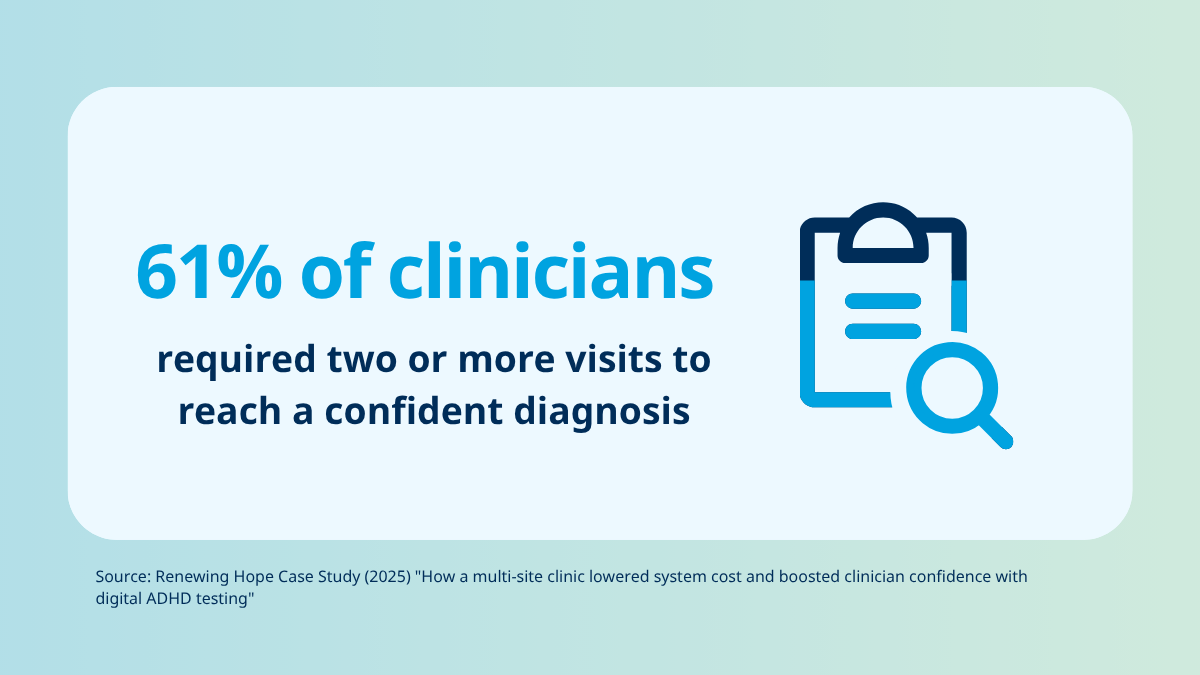
In a real-world multi-site clinic study, 61% of clinicians needed 2 or more visits to reach a confident ADHD diagnosis. And only 29% could do so within a single hour-long appointment. Repeated consultations to reach a diagnosis consume clinician time, limiting availability for other patients and delaying the patient's path to treatment.
Increased demand for specialist services
Referring ADHD assessments to specialists creates bottlenecks in the system, where demand outstrips the capacity of ADHD clinics. It may also increase the risk of losing them to another provider or incur an opportunity cost of not being an in-house service business.
These system costs can directly impact service quality, making it harder to deliver ADHD services consistently.
Patient costs:
3 ways that a delayed ADHD diagnosis can impact patients’ lives
- Reduced quality of life
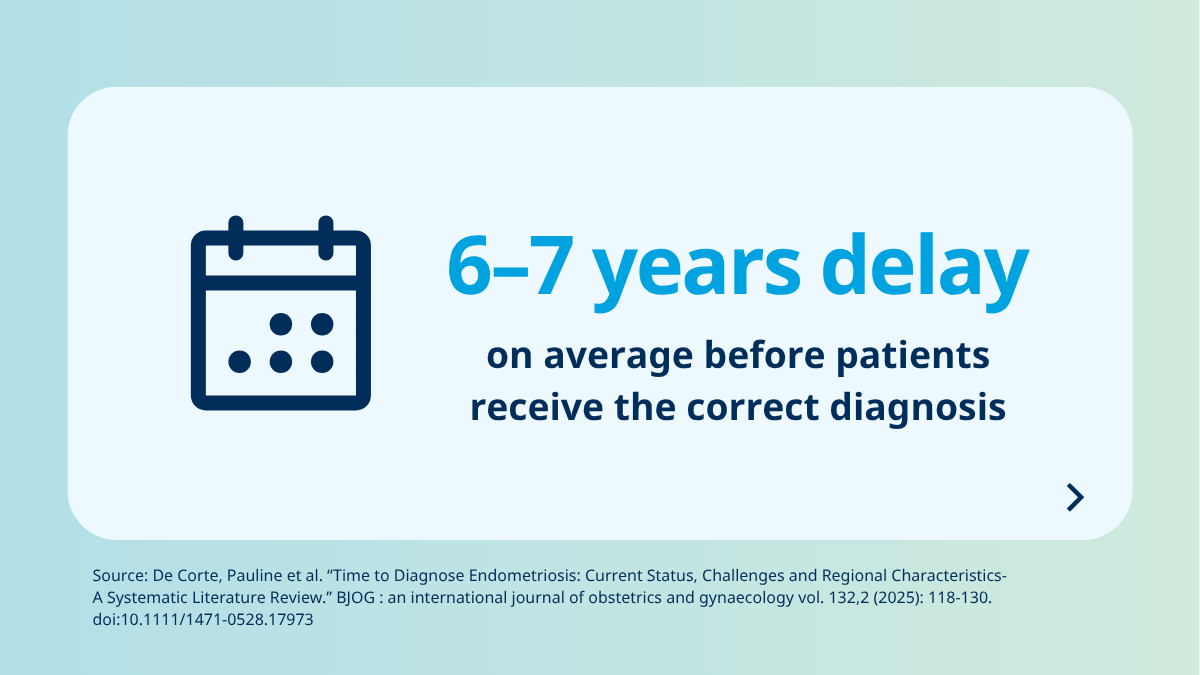
Before the correct ADHD diagnosis is made, the average patient has taken 2.6 different antidepressant medications without benefit. Their diagnosis had, in turn, been delayed by 6 to 7 years. A systematic review of the correlation between ADHD and quality of life of adults concluded that untreated ADHD significantly worsens the quality of life in adults. ADHD medication use has been linked to a decreased risk of suicide, substance misuse, depression, car accidents, and unintentional injuries in patients. - Academic challenges
In a large review of 176 studies, untreated ADHD was consistently associated with poorer academic experience. 75% of academic performance outcomes and 79% of achievement test outcomes showed poorer results compared with peers without ADHD. Furthermore, up to 32% of students with combined-type ADHD drop out of high school, compared to 15% of neurotypical teens. - Employment difficulties
Adults with ADHD miss an average of 22 workdays per year, according to reports by WHO, and they earn $10,791 less in annual income (Biederman & Faraone, Harvard). The total productivity cost to the U.S. economy is estimated at $122-138 billion annually. Men with ADHD are 2.1 times more likely to be unemployed, while women with ADHD are 1.3 times more likely to be unemployed when compared with working-age people of the same gender without ADHD.
Strategies to help you reduce diagnostic delays and improve service delivery
As a clinician, there are several steps you can take to improve patient accessibility and throughput. They can also help you diagnose with greater confidence, helping more patients receive a timely diagnosis.
Use digital tools to optimize your workflow and increase accessibility
Virtual appointments can help optimize clinician time and improve patient accessibility, particularly in remote and rural locations where travel may be a barrier to assessment.
Use objective data during ADHD assessment to support clinical decision-making
Using a digital ADHD test alongside subjective measures can help to increase clinician confidence when considering an ADHD diagnosis and reduce appointment length without compromising diagnostic accuracy. Shorter appointments could help you see more ADHD patients without increasing team capacity.
Triage patient referrals to make more efficient use of team resources
Smarter triaging may also help you allocate clinical resources more efficiently. Specialists can see high-risk patients, while more routine assessments are handled by upskilled team members, aided by an objective test. This approach can improve the efficiency of ADHD services by reducing bottlenecks and enabling more patients to receive a timely diagnosis.
Minimizing the cost of ADHD for patients, clinicians, and society
By standardizing workflows, triaging, and using digital tools and objective data, you could deliver more timely, efficient, and consistent care to patients.
Connect with Qbtech's expert team to learn how objective technology can help your clinical business by filling out the form below.