


The CDC estimates that around half of US adults with ADHD have used telehealth for ADHD-related services. Remote digital ADHD testing has emerged as one tool that can support these evolving care models while maintaining clinician oversight.
By offering remote solutions to your patients, you increase accessibility, improve patient experience, and optimize clinic efficiency. In this blog, we explore the benefits of remote ADHD testing, QbCheck integration, and discuss strategies to overcome potential hurdles that may arise with remote ADHD care.
Disclaimer: This is a quick-reference guide and is in no way a substitute for clinical training. The purpose of this document is to give clinicians a bird’s-eye view of what to expect when interpreting an objective ADHD test.
What are the benefits of remote digital ADHD testing?
Introducing virtual ADHD testing and remote appointments could help you and your patients in several ways. Let’s look at some of the ways your practice can benefit from hybrid or virtual service offerings.
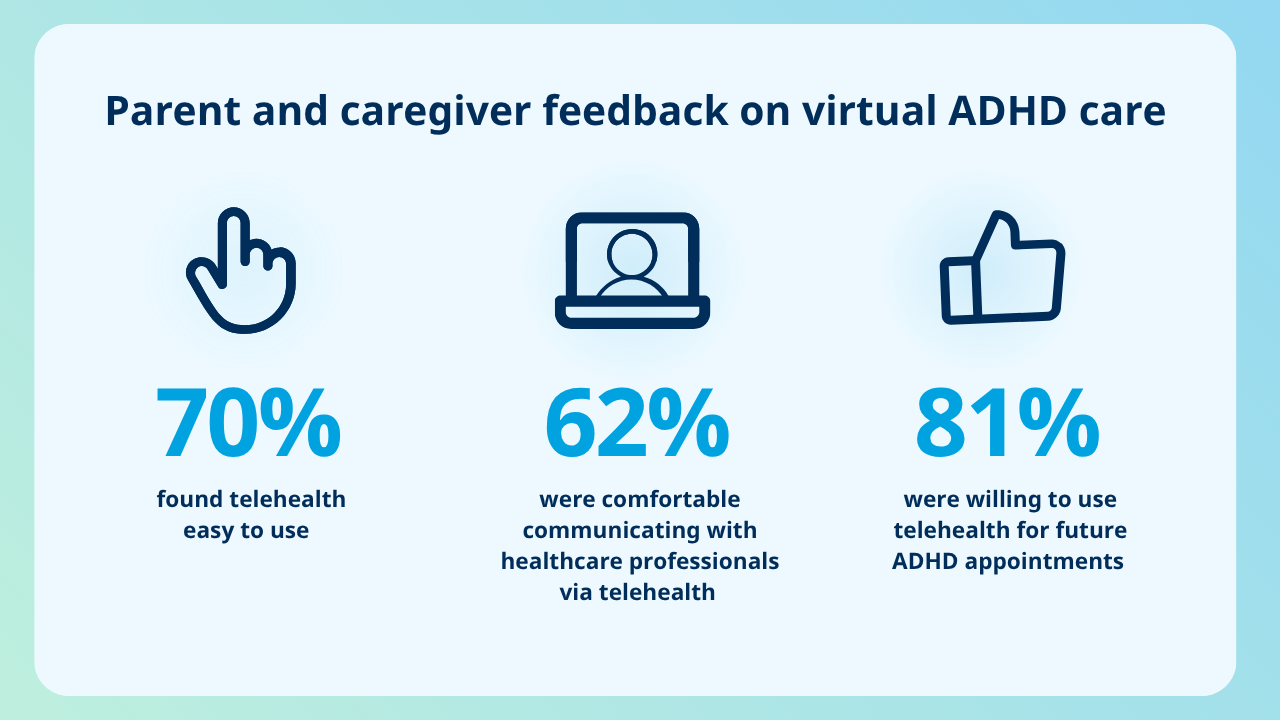
Source: Galvin et al.
Increase scheduling flexibility
Offering remote appointments gives greater flexibility in how, when, and where you assess your patients. You may choose to administer an ADHD test virtually, while clinical interviews are conducted in-person. This means your patients can easily work around employment or care commitments, limiting missing school or taking time off from work. As an example, QbCheck can be used in suitable home environments with high reliability.
One study noted that the average journey-time savings to patients attending ADHD appointments digitally rather than in person was 97.7 minutes. Furthermore, a clinic environment can be stressful to some patients, particularly children. And being able to test at home may improve the overall experience.
If you'd like to find out more about how the remote use of QbCheck works, we have curated this guide to walk you through objective technology in digital or virtual environments.
Reduce missed appointments
According to an NIH survey, 87% of participants rated how quickly they were able to be evaluated as an important factor when selecting a healthcare provider. This has benefits for you and your clinic, too. One clinic offering virtual appointments has seen missed visits and late cancellations decrease by 72% compared to in-person consultations.
Expanded access to ADHD care
As of late 2024, over one-third (122 million) of the US population were living in a Mental Health Professional Shortage Area. With digital ADHD testing, you can assess patients living beyond your immediate area, including those in remote and rural locations with limited access to care. From a business perspective, this can enable you to scale your clinic operations and increase your practice’s service area.
Streamline clinical operations
Virtual ADHD testing via telehealth has the potential to help reduce administrative burden as symptom data is collected digitally. The data from digital ADHD tests can be easily integrated with electronic health records, which have also been linked to reduced admin and errors.
Virtual service providers can also benefit from reduced administrative costs by using an API to automate data processes when using QbCheck for ADHD evaluation. The associated reduction in manual data entry and paperwork administration represents a valuable time and cost-saving opportunity.
Support medication optimization and treatment titration
Objective ADHD tests can be used as digital diagnostic aids for improving treatment efficacy by comparing pre- and post-treatment results to adjust medication dosages. Objective tests are more sensitive to medication effects than patient self-rating at both one-month and six-month follow-up visits.
Our ADHD tests are digital diagnostic aids that offer real-time data. This means you can test during expected peak medication effects, depending on the pharmacokinetic profile of the prescribed treatment.
Comparing virtual vs in-clinic ADHD testing outcomes
Remote digital ADHD testing can help overcome structural and psychological barriers that may arise when seeking ADHD services in traditional, in-clinic settings. Virtual medical services can also increase a clinic’s reach to remote or underprivileged populations.
Rather than choosing between virtual and in-clinic care, many ADHD services now combine both. Remote testing can be completed outside the clinic, while consultations and follow-up discussions take place either virtually or in person. This gives services greater flexibility in how they design and scale ADHD assessment pathways.
Considerations when implementing remote ADHD testing
While virtual testing offers several benefits, successful implementation depends on factors such as:
- Access to suitable technology
- Reliable internet connectivity
- Appropriate testing environments
- Patient suitability
- Staff training and workflow design
Many services address these challenges through hybrid care workflows that combine remote and in-person elements where needed.
Getting started with remote ADHD care
Many services begin their shift to a hybrid workflow by introducing remote testing into a small subset of their assessment models, such as:
- Pre-assessment information gathering
- ADHD diagnostic evaluations
- Medication titration follow-ups
- Routine outcome monitoring
This helps clinicians evaluate workflow impact before broader implementation.
Common clinician concerns about remote ADHD care delivery (FAQs)
You may have questions about virtual ADHD testing and its suitability; Here are answers to frequently asked questions and queries.
Remote testing may be particularly valuable for patients living in rural or underserved areas, adults balancing work and family commitments, or students with busy school schedules. Telehealth options may also benefit services operating hybrid assessment models and patients who are already receiving care through virtual models of care. Please note that suitability should always be determined by clinical judgment and local protocols.
A QbCheck assessment takes 15-20 minutes. It’s a computer-based test for assessing the symptoms of ADHD in people aged 6 to 60. During the test, physical movements and responses to visual stimuli are tracked.
QbCheck includes data on patients’ activity levels during the test, including subtle movements that may not be obvious. The digital test also provides detailed reporting on each symptom as well as a Total Symptom Score, assessing the likelihood of that patient having ADHD based on a comparison against age- and sex-at-birth control group. These test results then form part of your overall assessment, combining objective and subjective ADHD assessments for better clinical accuracy.
With appropriate training, testing can be carried out by a range of team members, which can help release pressure on specialist clinicians. We provide step-by-step guides to walk patients through the set-up and testing process remotely. Voice, text, and video instructions highlight how the patient should set up their space and minimize distractions. This facilitates ideal testing conditions. QbCheck includes video instructions and a practice test before proceeding to the main test.
In addition, the ability to administer at-home testing without the need for clinical teams to directly set up and guide patients through testing helps reduce time and administrative burden for clinics.
When redesigning workflows to add digital testing, patient-clinician engagement mustn’t be compromised. In hybrid ADHD clinics, patients can be moved between digital remote and in-clinic service workflows if you or your patient has concerns. If introducing digital testing alongside other recommended clinical assessment technology for remote patient engagement, such as secure online messaging and online symptom monitoring, these could even increase engagement opportunities.
In the US, before clinicians can prescribe ADHD medication via telehealth, an in-person evaluation is required by either the prescribing clinician or the referrer. In the UK, electronic prescriptions for controlled ADHD medications typically require handwritten signatures. An advanced electronic signature may be acceptable if using the Electronic Prescription Service (EPS).