


Across public and private healthcare systems, clinics are struggling to manage rising referral volumes, lengthy waitlists, and limited specialist capacity.
In the US, long wait times and limited access to specialists have been identified as major barriers to ADHD diagnosis by the Department of Health and Human Services. On the other hand, in England, over 60% of adults and over 65% of children had been on a wait list for ADHD assessment for over a year as of December 2025.
As demand continues to grow, many services are exploring new ways to improve efficiency, optimize clinical workflows, and reduce delays in ADHD care delivery.
Why are ADHD waitlists increasing?
The ADHD taskforce has identified several reasons for growing waitlists in England, including:
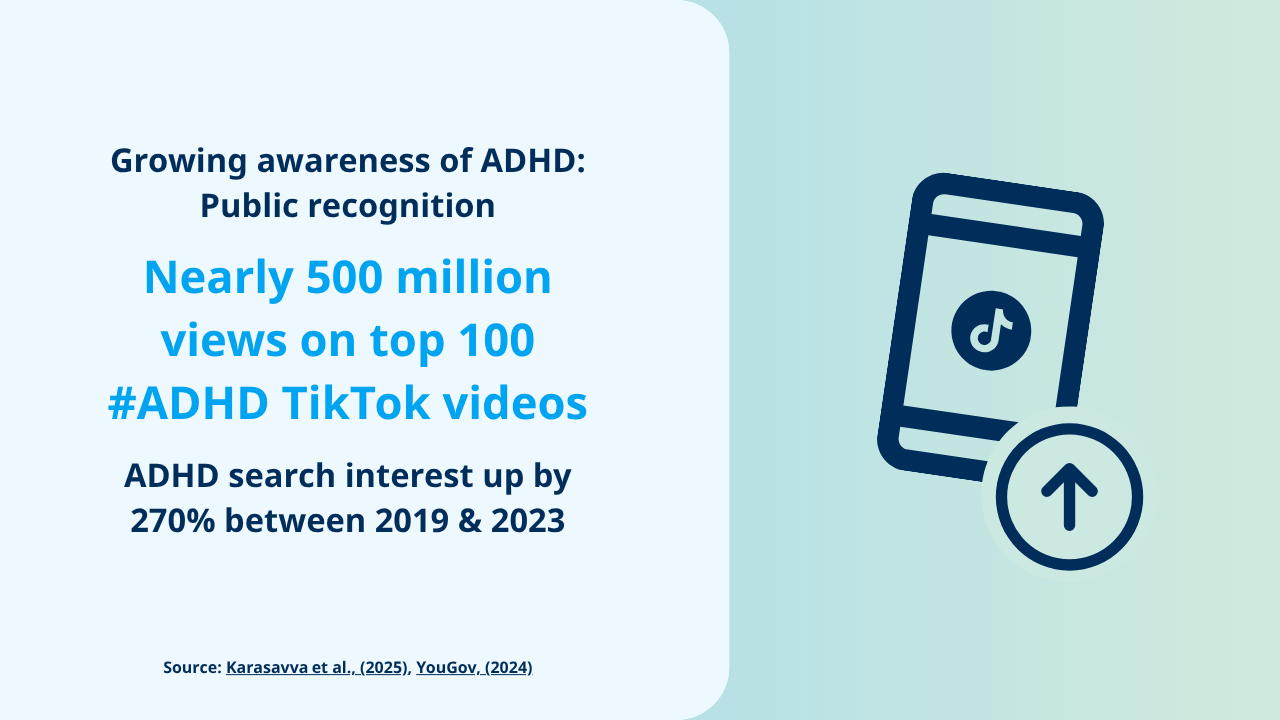
- Greater awareness of ADHD
- Changes in DSM-5 and ICD-11 diagnostic criteria
- Patients who were previously missed or misdiagnosed, coming forward for assessment
- Recognition of ADHD as a persistent condition affecting both adults and children
ADHD services in England are facing unprecedented demand
As of December 2025, more than 65% of children and over 60% of adults waiting for ADHD assessment in England had been waiting longer than one year.
The ADHD taskforce also identifies that many clinical workflows contain inefficiencies, with paper-based processes, lengthy administrative tasks, and duplication. They also highlight that “NHS ADHD services could benefit by harnessing technology.”
How can ADHD clinics reduce wait times?
Many of the factors contributing to waitlist delays are beyond clinicians’ control. Traditional ADHD assessment models were not designed for current referral volumes. As demand rises globally, clinics are increasingly exploring new models of care.
These modern clinics combine triage, digital tools, multidisciplinary teams, and objective data to improve access while maintaining clinical quality. Following a similar suit, here are some strategies that may help reduce ADHD wait times in your service.
Develop a digital-first ADHD workflow
Incorporating digital tools into your workflow could support more efficient care delivery and improved patient satisfaction. Patients using an online portal combining ADHD psychoeducation, FAQs, and a medication decision-making component showed increased satisfaction and a higher likelihood of starting medication. The time to treatment initiation (TTI) also reduced by 41%, from a mean of 86 days to 51.
Explore our guide: Designing a digital ADHD clinic workflow.
Triage incoming ADHD assessment cases to improve patient flow
Patients present for an ADHD assessment for a range of reasons, including:
- Referral from another healthcare provider
- Personal concerns/parent or teacher concerns
- Showing symptoms suggestive of ADHD
These initial triggers may contain information about the patient that can help you triage assessment cases. For instance, the presence of comorbidities, a safeguarding issue, or an expression of concern for patient safety may highlight a more urgent need for assessment or suggest a more complex case.
Equally, some cases may be more appropriately routed to an alternative assessment workflow (e.g. autism or broader neurodevelopmental assessment) rather than an ADHD-specific diagnostic process.
Approximately 30%–50% of all outpatient specialty referrals are not completed successfully
In such instances, objective testing can help route these to a more appropriate service. You may also be able to triage how you assess patients. The North Staffordshire Child and Adolescent Mental Health Services (CAMHS), restructured their clinical workflow by introducing Qb testing. Nurse practitioners are now able to assess ADHD patients who would have previously been referred to specialist services. Following implementation, wait times have reduced from around 18 months to 12 weeks, and now, only complex cases are referred to a psychiatrist.
North Staffordshire CAMHS has also recently introduced QbCheck to further help manage waiting lists.
Introduce an objective test to your clinical workflow
Adding a digital ADHD test to your workflow can help your clinic address wait times. Several real-world efficiencies have been observed when a clinic or health service has introduced Qb testing, including but not limited to reducing appointment length, improving clinician confidence in decision-making, and standardizing the ADHD workflow.
Digital ADHD workflows may accelerate access to care
Introducing a digital ADHD care platform reduced average time to treatment initiation by 41%, from 86 days to 51 days.
How UK clinical workflow trials used Qb testing to reduce ADHD wait times
In a randomized control trial, introducing Qb testing to a clinical workflow:
- reduced appointment length by 15%
- increased clinicians' confidence in diagnostic decisions
- doubled the likelihood of excluding ADHD
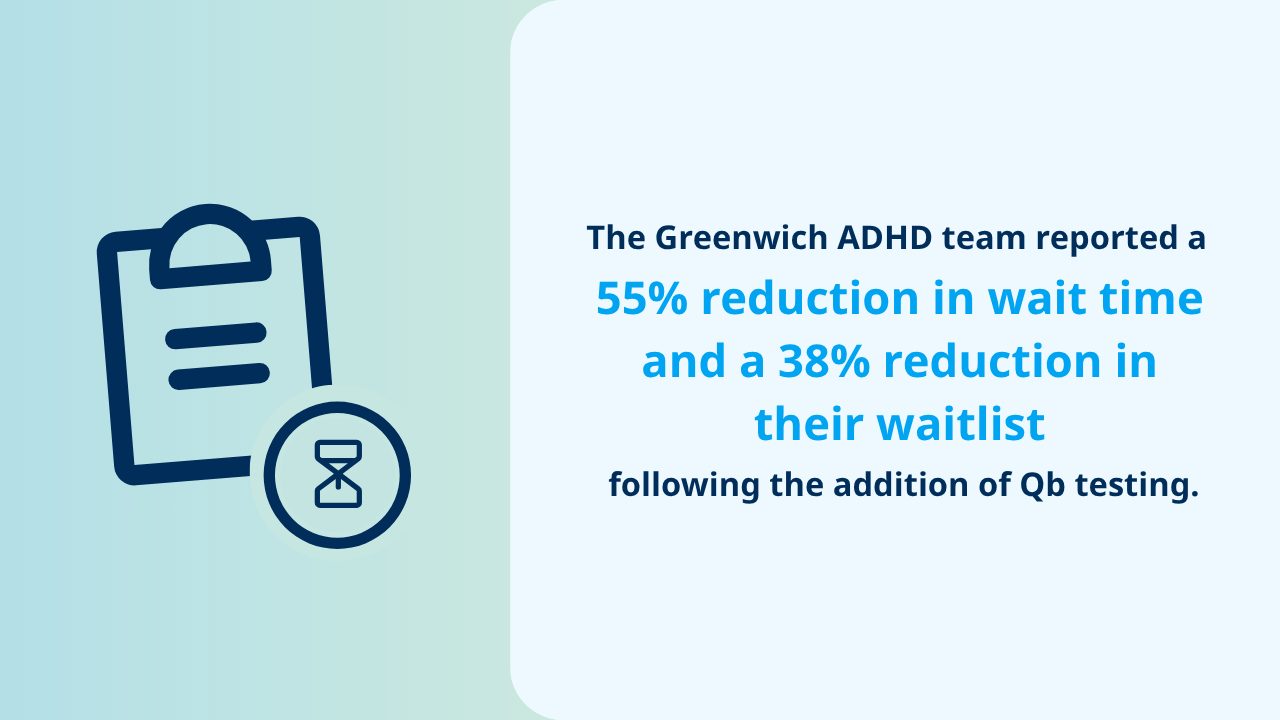
An East Midlands NHS demonstrator project found a median reduction in wait time from assessment to diagnosis of 153 days after introducing Qb testing.
How Qb testing has reduced ADHD assessment waitlists in US clinics
Before using QbCheck, 61% of clinicians at Renewing Hope required two or more patient visits to make a decision. After objective measures were added to the clinic’s workflow, of the surveyed clinicians, 86% reported feeling more confident. The clinic also reported wait times of under three weeks at most sites after implementation.
Legion Health, a Texas-based psychiatric clinic, introduced Qb testing when reconfiguring its clinical workflow to provide a more standardized and consistent model of ADHD care. Following implementation of the redesigned workflow, the clinic reported reduced time to diagnosis and increased retention rates.
Frequently Asked Questions
Sometimes, the results of subjective ADHD assessment measures can be inconclusive. Parent and teacher reports of symptoms may conflict, there may be an incomplete developmental history, or symptoms may not appear to present in multiple settings. This can make reaching an ADHD diagnosis challenging. An objective test can help by providing quantitative data on symptoms that can be considered alongside subjective data.
As ADHD cases are often referred to specialists for assessment and diagnosis, this can create a bottleneck, and demand can outstrip the capacity of services. This is why triaging of ADHD services and utilizing the skills of a multi-disciplinary team can help.
Developing scalable ADHD service delivery models can help you see more patients and reduce waitlists. Remote testing technologies like QbCheck can support faster screening and easier scheduling, which thereby help services reduce administrative burden and increase workflow capacity. Evidence suggests hybrid ADHD clinics (those offering a combination of in-person and virtual care options) can take on additional patients over a wider geographical area. Thereby, it allows for scalable assessment approaches to ADHD care delivery.