


Objective data is increasingly playing a central role in modern ADHD care, helping clinicians move beyond subjective reporting alone to more structured, measurable insights. In telepsychiatry settings in particular, where care delivery is virtual, the need for reliable and scalable assessment tools is even more pronounced.
One US-based clinic adopting this approach is Legion Health, a virtual ADHD care provider focused on data-driven mental health delivery. Their integration of QbCheck reflects a broader commitment to adding objective measurement into everyday clinical workflows. As noted by founding clinical lead Charlotte Coates, PMHNP-BC, this approach supports more confident, structured ADHD assessments within a fully remote care model.
In the following case study, we explore how objective testing has been integrated into their ADHD model and the impact it has had on clinical workflow and decision-making.
Key takeaways
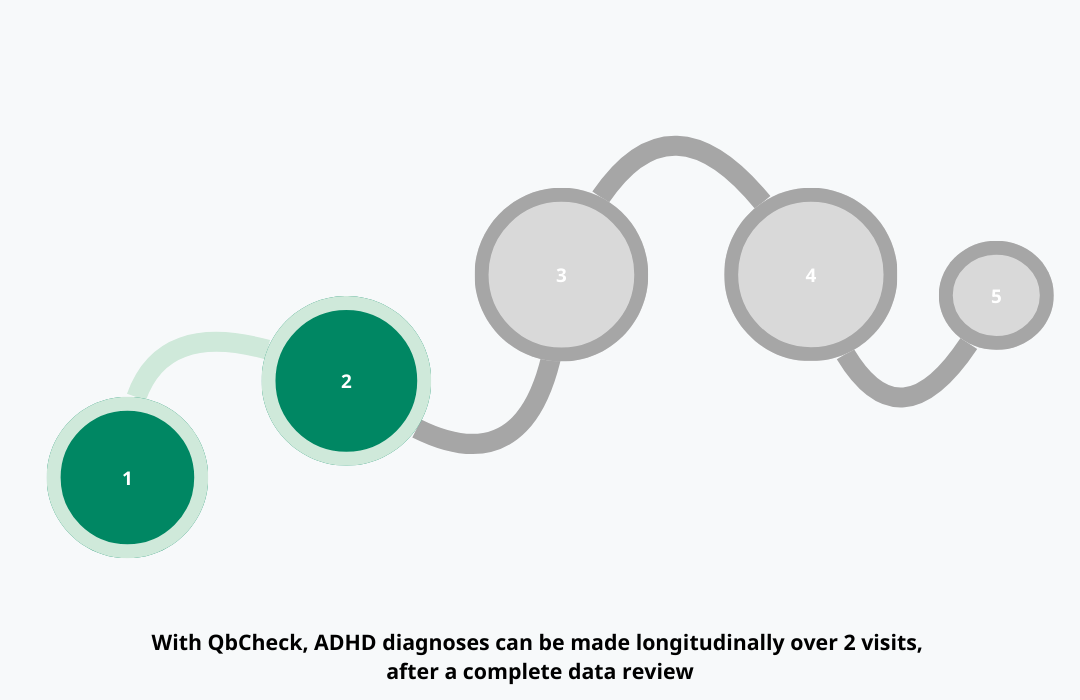
- With QbCheck, ADHD diagnoses can be made longitudinally over 2 visits, after a complete data review
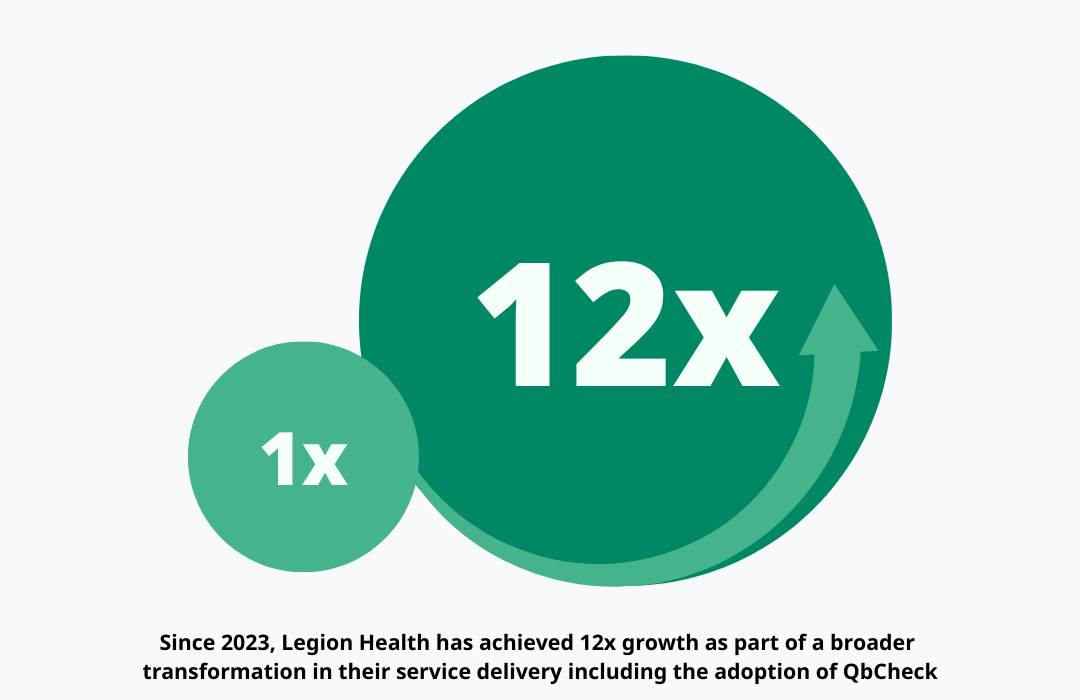
- Since 2023, Legion Health has achieved 12x growth as part of a broader transformation in its service delivery, including the adoption of QbCheck
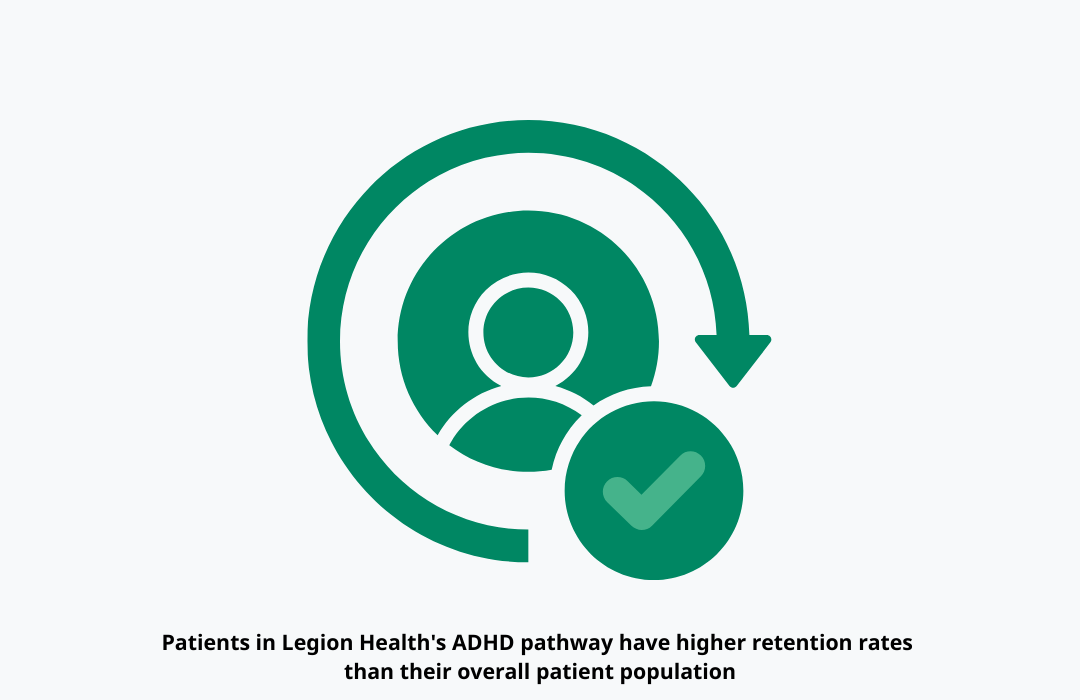
- Patients in Legion Health's ADHD model have higher retention rates than its overall patient population
The challenge
Standardizing virtual ADHD diagnosis and boosting clinician confidence
Legion Health faced a common issue concerning ADHD care providers – ensuring confidence and objectivity in assessments.
Telehealth testing has many benefits; however, there is often scrutiny around companies providing virtual ADHD care.
The lack of formal, evidence-based guidelines for diagnosis, treatment, and management in a remote setting has led to more localized and ad hoc implementation of processes. To ensure efficiency in ADHD care, the need for quantifiable data and measurable outcomes arose. Their previous approach led to inconsistencies in diagnosis and treatment, increased administrative burden, and potential delays in providing appropriate care. Additionally, clinicians were balancing patient expectations with clinical due diligence, leading to varied diagnostic timelines and approaches.
"Confidence in ADHD diagnoses was our pain point. For anyone who isn’t from a clinical background (patients) the process was puzzling. There just wasn’t good, objective data."
- Charlotte Coates, Clinical Lead
The solution
Integrating QbCheck to improve ADHD diagnosis and treatment
QbCheck’s integration had the following critical objectives:
Standardizing diagnosis with objective testing
Individual clinicians largely made ADHD assessment decisions at their own discretion, resulting in varied approaches. Hence, the primary objective of QbCheck’s integration was to use objective data to standardize the diagnosis and treatment process across the board.
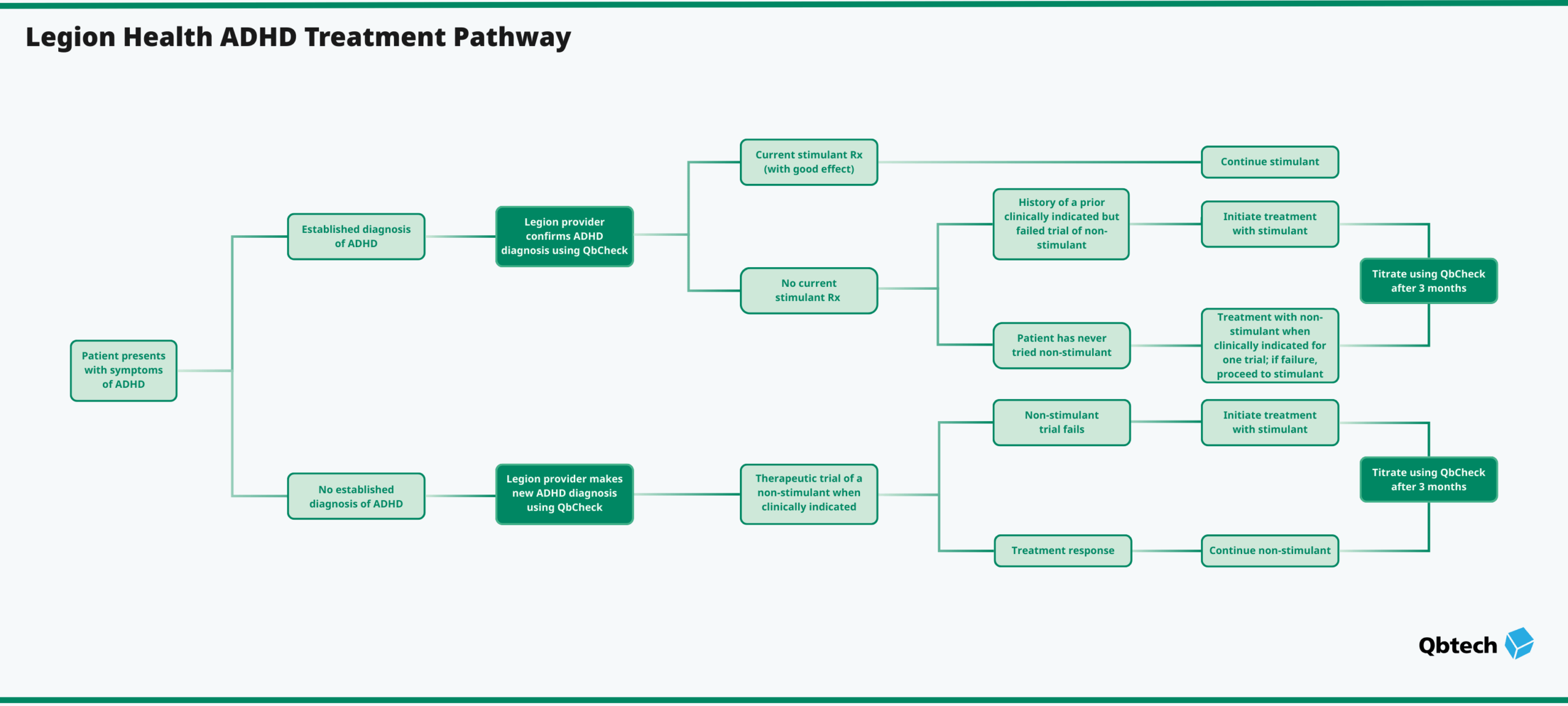
Legion's ADHD workflow - Legion Health formalized QbCheck as a core component of its ADHD diagnosis and treatment process in late 2023.
Decoupling ADHD testing and medication management
Clinicians in the past administered the test reactively–when they considered stimulant medication as a possible treatment. They would rely on subjective measures and use QbCheck selectively when they suspected stimulant medication might be needed. By using QbCheck as an independent, objective diagnostic tool, clinicians aimed to make diagnoses based on the complete range of clinical data rather than focusing solely on treatment outcomes.
“Before we implemented QbCheck in a structured way, we were leaving it up to our providers’ judgement, if and when they wanted to use the objective test. Most used it when they suspected stimulants to be a potential treatment path, which requires data-gathering and takes time. We, instead, wanted a formalized process where QbCheck aids in validating the diagnosis as a whole and is not just used in treatment follow up.”
- Charlotte Coates, Clinical Lead
Enhancing clinical decision-making
Another key objective was to improve clinicians' confidence in decision-making in a virtual setting where direct observation and in-person interaction may be limited. The digital ADHD test’s integration was aimed at offering a holistic picture of patient symptoms compared to a control group, providing a sense of clarity and patient familiarity for the provider.
Increasing transparency and improving patient outcomes
Offering patients a structured and easy-to-understand journey, from initial evaluation to diagnosis and treatment, was a central objective when integrating objective testing to increase transparency and improve patient outcomes.
The impact
Standardized care model, improved clinician confidence, and empowered patients
In their process to eliminate subjectivity in diagnoses and make their clinical workflow more efficient and scalable, the team at Legion Health started looking for quantifiable, objective data. QbCheck offered a more solid ADHD model and reliable care options that providers were happy to lead with, and which helped improve their confidence in decision-making.
Getting measurable outcomes using clinically validated QB testing also supported Legion’s commitment to delivering technology-first care, ensuring patients' treatment plans are based on comprehensive, data-backed evaluations.
Increased diagnostic confidence
Previous studies show digital ADHD technology helped increase clinician confidence by 77%. Providers found the standardized approach reduced administrative burden and allowed them to focus more on patient care rather than navigating inconsistent workflows. Another clinician on Charlotte's team mentions how QbCheck improved her confidence in clinical decision-making.
Reduced time to diagnose
Owing to the structured use of QbCheck, the ADHD diagnostic process at Legion was significantly expedited. Standardization of processes led to a reduction in time spent during data collection and ensured continuity of care for patients.
QB testing helped enhance data-driven care at Legion Health. Providers were able to get real-time, quantifiable, and evidence-based objective data on the core symptoms of ADHD–inattention, hyperactivity, and impulsivity–enabling a swifter and more seamless diagnosis.
“In addition to the traditional subjective approach to diagnose ADHD, by utilizing QbCheck's objectivity, my level of confidence and decision making has significantly improved with regards to understanding patient's symptoms and initiating treatment modalities for newly diagnosed patients. The test is particularly valuable for those patients who are more complex and have other comorbidities.”
- Bridgett Gant, PMHNP-BC, FNP-C
Expanded access to ADHD care
For patients in rural, or underserved communities, access to in-person care is difficult. Objective data, in such instances, empowers individuals and destigmatizes ADHD by rationally explaining behaviors through data. Remote testing, enabled by QbCheck greatly expanded access to care for these individuals. It also became a tool for destigmatization and patient empowerment.
“Rural communities make up a majority of our patient population, where lack of ADHD resources, accessibility and provider shortage exists. The telehealth element (of QbCheck) allows these communities to receive specialized, data-driven ADHD assessments without having to travel far distances for reliable care.”
Telehealth ADHD testing with QbCheck
Virtual ADHD testing helps reduce the time for patients to access formal care and helps them get the necessary care faster. Parents, caregivers, and college students transitioning to independent healthcare particularly valued the time savings of virtual appointments.
Improved patient outcomes
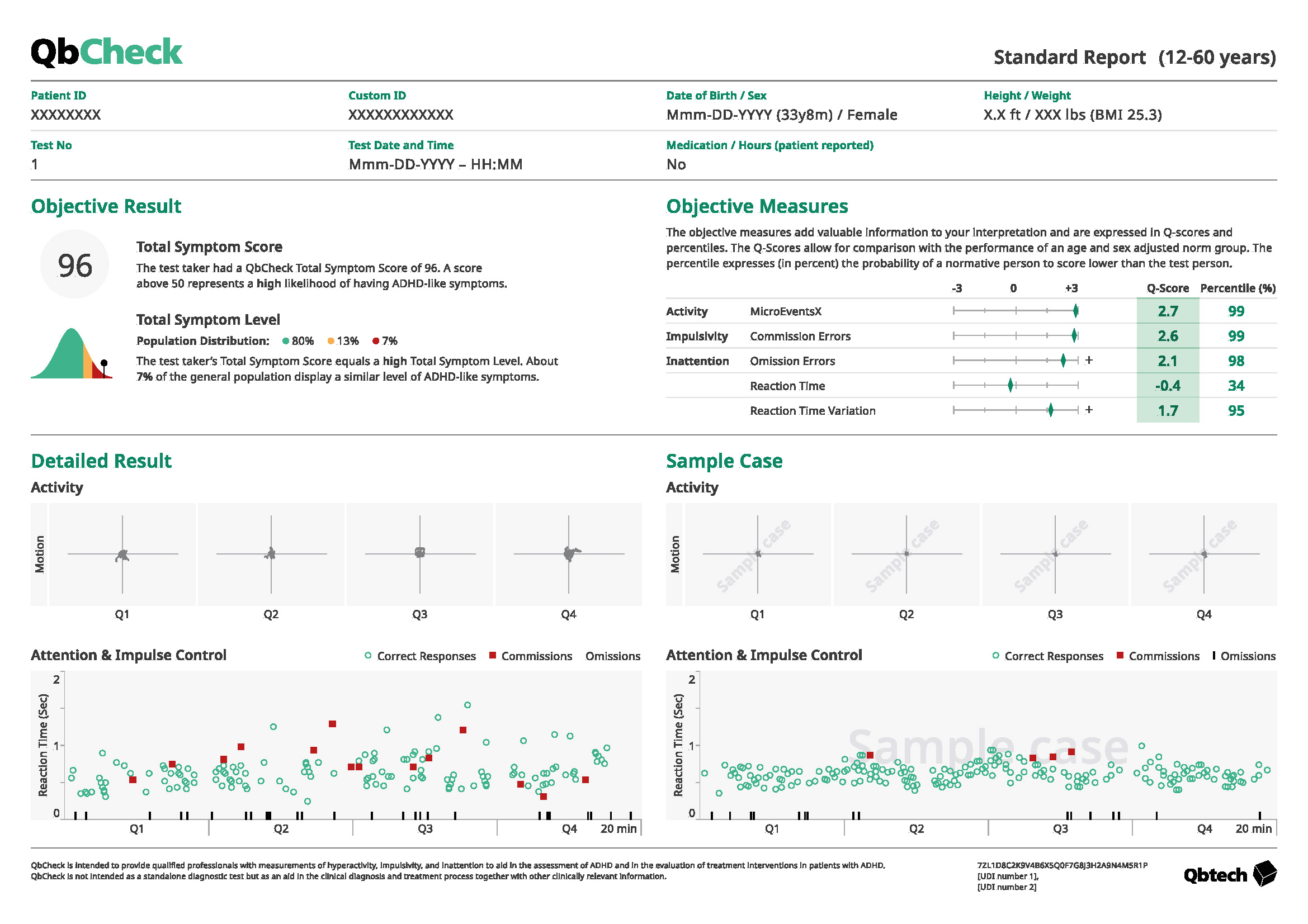
QbCheck provided a robust, objective tool that empowered patients by offering clear, quantifiable data on their symptoms. The technology can pick up on symptoms with 1mm precision. Furthermore, interpreting a QbCheck test report is simple. When viewing their assessment results, presented in a clear visual report, patients reported having an improved understanding of symptoms, diagnosis and treatment options, leading to less self-blame and a more positive outlook on ADHD.
Patient story: Virtual care empowers patient to become an expert in his ADHD journey
Charlotte mentions how patient empowerment is at the core of Legion Health’s patient care pathway. With clear, objective, and reliable data, patients have a better understanding of their symptoms and behaviors. It makes them a co-pilot in their own ADHD care journey.
“I had a patient with a military background who never received a formal diagnosis. Despite trying to get assessed in the past, he was time and again told he didn’t meet diagnostic criteria as he showed no signs of hyperactivity. When he took a QbCheck, it immediately picked up correlating symptoms that made ADHD apparent.
We were then able to sit down and have a meaningful conversation about symptom masking and other coping mechanisms being a part of his military training. The diagnostic journey, for that patient, was a self-learning experience and finally getting the care he’d been seeking for so long was extremely rewarding.
For us as clinicians, it helped shed light on how to provide accurate care for others coming from similar backgrounds.”
By implementing a system utilizing the remote testing solution, Legion Health was able to simplify the diagnostic and treatment workflow for its clinicians and patients.