

Advancements in ADHD research and technology have historically helped inform diagnostic frameworks and clinical guidelines like DSM-5, ICD-11, and NICE. Following standardized practices can enable clinics to deliver better-informed care.
However, translating clinical research into everyday practice can be challenging, particularly when ADHD services are under pressure.
In this blog, we explore the real-world capacity constraints that can compromise ADHD care quality. We’ll also share the best practices that can help you close the gap between ADHD guidelines and clinical practice.
Disclaimer – This blog is for general information only, sourced from reputable and reliable references. It is not medical advice, nor should it be used as a substitute for professional guidance. Qbtech is not liable, and reader discretion is advised.
What does evidence-informed care look like for ADHD services?
Research has identified core practices that can support a more robust assessment and better patient care. Many of these have been incorporated into official ADHD guidelines as examples of best practice. Here are some examples:
- Using multiple data sources in your ADHD assessments
- Delivering ADHD care in multi-disciplinary teams
- Increasing patient understanding and engagement with psychoeducation tools
- Using objective tests during ADHD assessments
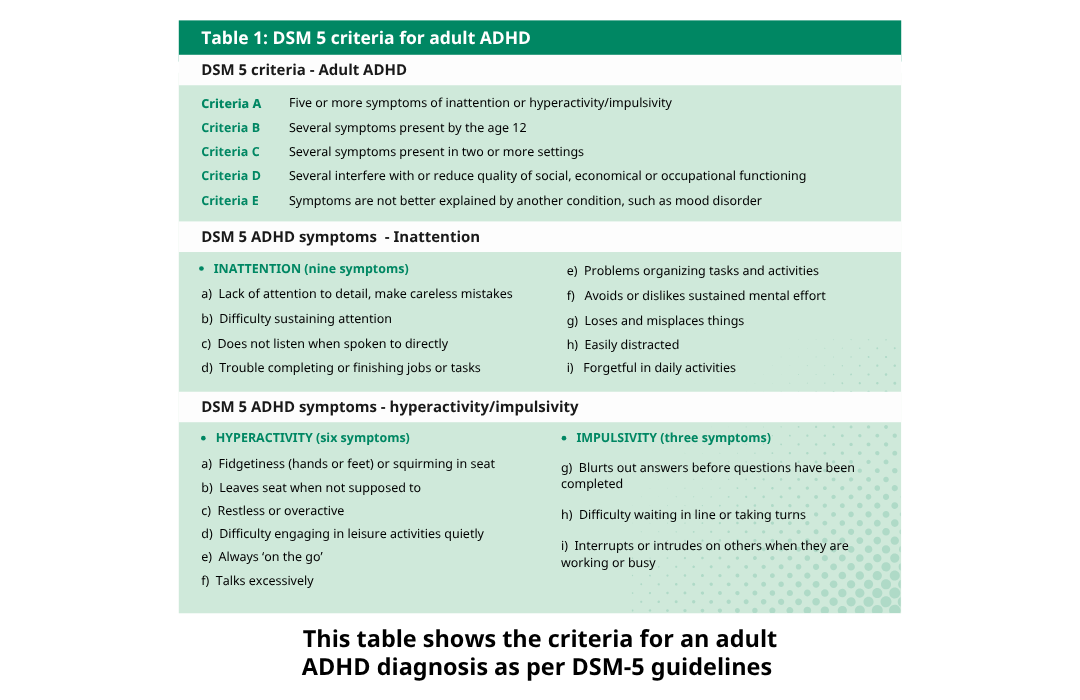
Our understanding of ADHD is continually evolving, with new research regularly published. However, there is still no single standardized guideline in place for diagnosis. Several ADHD frameworks exist to guide clinicians, and among them, DSM-5 is the most widely used.
Barriers to implementation of ADHD guidelines
While ADHD care standards may be well-defined, real-world constraints can make them difficult to implement, particularly as some are external and beyond control. Let’s explore what causes a gap between ADHD guidelines and clinical practice.
Staff shortages and system-wide capacity issues
There are significant shortages in key areas of mental health skills. In the US, the supply of adult psychiatrists is projected to decrease by 12.3% from 2024 to 2037, while demand is projected to increase by 43.7%.
In England, 14% of consultant psychiatrist posts were vacant at the end of March 2025, while a further 13% of posts were covered by temporary staff.
Recruitment cannot solve capacity issues in ADHD care when shortages are system-wide.
Long waitlists and backlogs
Many clinics are trapped in a cycle of trying to catch up and reduce waitlists, which may compromise the quality of care that can be delivered.
Lengthy ADHD care waitlists are a widespread problem. The Department of Health and Human Services has identified long wait times as a major barrier to ADHD diagnosis in the US.
In England, NHS data shows that as of December 2025, over 60% of adults and over 65% of children had been on a waitlist for ADHD assessment for over a year.
High referral volumes
Large numbers of referrals add new patients to already overstretched systems and further limit clinics’ capacity to catch up on backlogs. Each referral also requires administrative processing, triage and clinical review, increasing workload before patients even reach an assessment.
Competing priorities within healthcare systems
ADHD care is rarely delivered in isolation. Clinics are balancing resources across similarly stretched services for other mental health conditions. There is also significant variation in ADHD workflows between clinics and even within the same health services. Information may be collected differently and with varying levels of completeness. Budget pressures can also be a limiting factor.
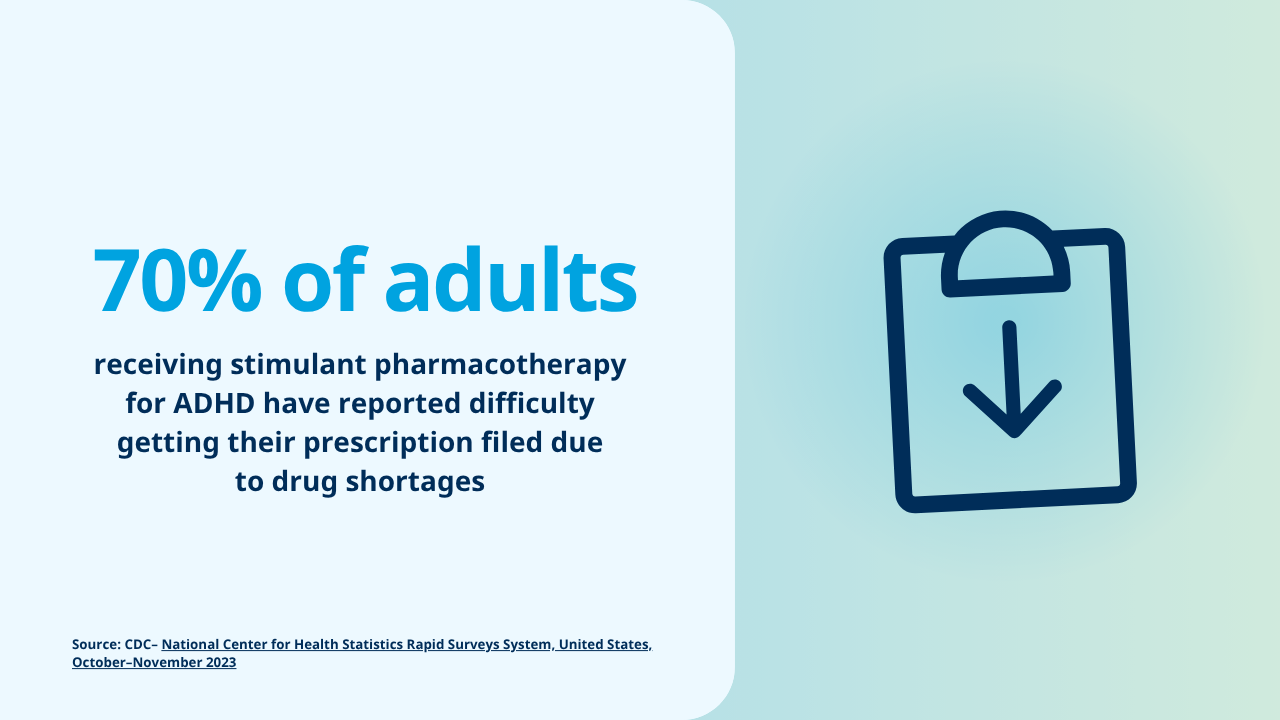
The combined effect of these constraints is that patients experience delays, bottlenecks develop in workflows, and care compromises are often required in the balance of quality versus capacity.
Source: CDC– National Center for Health Statistics Rapid Surveys System, United States, October–November 2023
How to close the gap between ADHD guidelines and clinical practice
While many of the pressures facing ADHD services cannot be solved at an individual clinic level, services can still take steps to improve how care is delivered and bring it in line with ADHD guidelines.
Redesign ADHD workflows to improve service efficiency
Are your ADHD services organized most efficiently? You may be able to improve your clinic’s efficiency and increase patient throughput by redesigning your workflow:
- Telehealth appointments can help optimize clinician time
- Introducing digital ADHD tests can reduce the time from assessment to final decision
- Triaging can help you make better use of your full clinical team’s capacity and allocate clinical resources more efficiently
- Electronic Health Records have been found to improve efficiency, reduce admin burden, and minimize errors
Use staff training and upskilling to increase team efficiency
While staff shortages limit the scope for recruitment, training can unlock existing capacity in your team. North Staffordshire CAMHS upskilled nurse practitioners to use QB testing to assess and diagnose routine ADHD cases. This has reduced bottlenecks and waitlists by saving specialist capacity for complex cases.
Quality improvement initiatives
Define and track metrics around clinical, operational, and patient outcomes. This will help you identify whether ADHD workflows are working well or if additional quality improvements are needed. A structured approach to measurement can support continuous improvement by helping services make more informed decisions about how resources are used and how care is delivered.
Designing systems to support quality of care and implementation of ADHD guidelines
Closing the implementation gap requires practical approaches that help services translate evidence into sustainable ways of working.
The bigger opportunity lies in translating existing evidence into systems, workflows, and processes that your clinicians can use consistently every day. The organizations that succeed will be those that focus not only on what the evidence says, but also on how it gets implemented in practice.
In our upcoming blog, we're exploring the frameworks that can help you move from intention to implementation and build quality models of care that can function, even with high demand.