

ADHD symptoms can differ in females and males, with women sometimes displaying subtler, inattentive symptoms. These gender differences in ADHD presentations have historically led to an underdiagnosis of women and girls. In this blog, we explore the differing presentations of ADHD in women vs men, and why ADHD is often missed in females. The panel also explores some best practices for clinicians diagnosing ADHD in women.
Disclaimer – This blog is for general information only, sourced from reputable and reliable references. It is not medical advice, nor should it be used as a substitute for professional guidance. Qbtech is not liable, and reader discretion is advised.
Do ADHD symptoms present differently by gender?
Each patient’s experience of ADHD is unique, and there isn’t a uniform male or female presentation of symptoms. However, there is evidence to suggest that a patient’s sex at birth can influence how ADHD symptoms present.
A meta-analysis of 52 studies including over 8,400 females and 9,900 males with ADHD found that males showed significantly more severe hyperactivity/impulsivity symptoms across the lifespan. In contrast, several studies suggest that females exhibit predominantly inattentive symptoms.
ADHD diagnosis rates in females vs males
In the US, boys are almost twice as likely to be diagnosed with ADHD as girls. By adulthood, this gap has narrowed significantly, with the ratio becoming much closer to equal.
One possible explanation is that females tend to be diagnosed later with ADHD. In a study of 16,458 ADHD patients, 17.1% of the women did not receive a diagnosis until adulthood, compared with 8.4% of men.
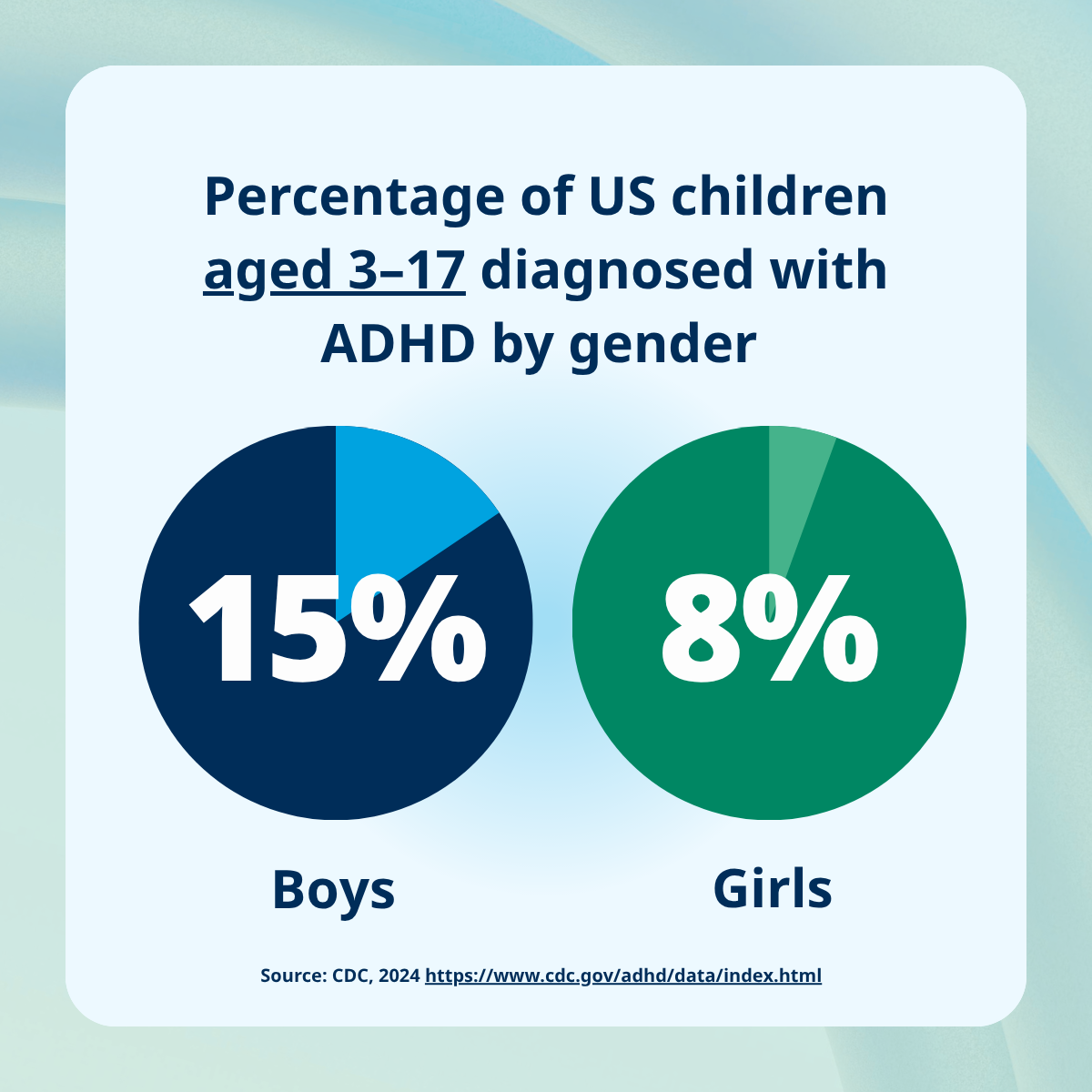
Source: CDC,2024. https://www.cdc.gov/adhd/data/index.html
Why is ADHD often missed in girls?
Later-life diagnosis in women may be partly due to ADHD symptoms being missed earlier in life. Let’s explore some of the issues that may be contributing to this, and the best practices for clinicians diagnosing ADHD in women.
Is our understanding of ADHD male-biased?
Early perspectives on ADHD were that it only affected males, leading historical studies to draw disproportionately on male sample populations. Concerns persist that, while ADHD is now recognized as affecting women and girls, scientific literature may still overrepresent male presentations of ADHD due to higher prevalence. Historical sampling differences may contribute to female presentations of ADHD being less studied, recognized, and understood.
Differences in ADHD symptoms between females and males
Analysis of symptom presentations suggests that ADHD symptoms more commonly seen in women and girls may be more easily missed than those seen in males. Note: these are general trends and not diagnostic distinctions.
The table below helps compare symptom presentation of ADHD in boys vs girls.
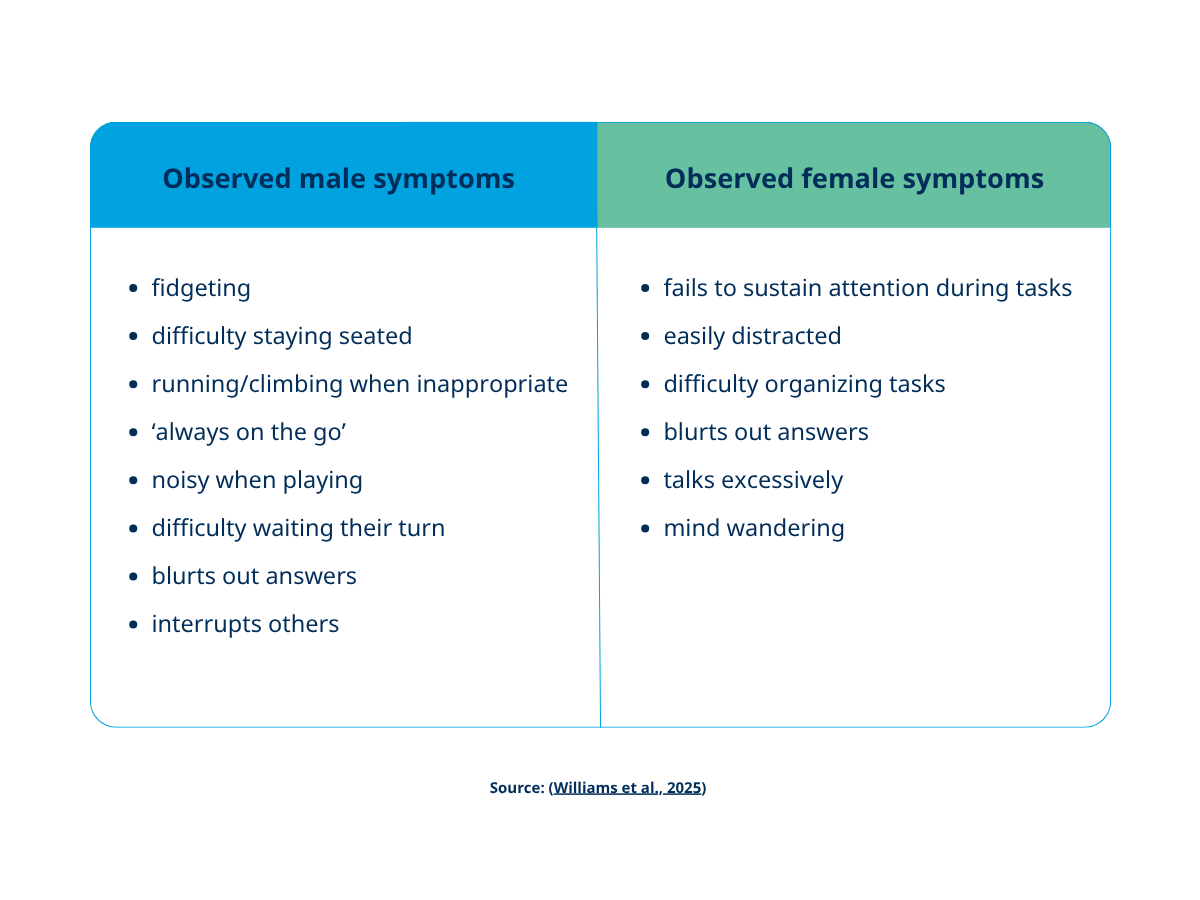
Source: Williams et al., 2025
The difficulty for teachers, parents, and clinicians is that male symptoms may align with what has been described as the ‘disruptive boy’ stereotype that persisted for many years.
The internalized inattentive ADHD symptoms in women and girls are less likely to be disruptive in class or at work and are more easily overlooked. The overall impact is that women and girls are less likely to be referred for diagnosis and treatment.
ADHD coping and masking strategies in women and girls
People with ADHD, particularly if undiagnosed, may sometimes develop compensatory or coping strategies to help them manage behaviors. There is some evidence that females with ADHD may develop more effective compensatory strategies than males, which can mask or mitigate symptoms.
A study exploring sex differences in adults with ADHD explains how for males, coping strategies may visibly highlight impulsivity and risk-taking behaviors . By contrast, female compensatory strategies of self-monitoring behaviors and emotional suppression can make diagnosis more challenging.
ADHD, menstruation, and the menopause
Another factor in the diagnosis of ADHD in females is that ADHD symptom presentations may vary with changing hormone levels. Some evidence suggests that ADHD symptoms fluctuate at different times in a woman’s ovulatory cycle and lifespan. Declines in estrogen levels have been associated with increased symptom severity, e.g., around the start of menstruation. While ADHD symptoms may be less noticeable just before ovulation, when estrogen peaks.
During perimenopause and menopause, when estrogen and progesterone levels decline significantly, ADHD symptoms may worsen.
Best practices for clinicians diagnosing ADHD in women
When assessing females for ADHD, there are several steps you can take to reduce the risk of underdiagnosis. Let's look at sme of them –
Focus on patterns of behavior, rather than just symptoms
If patients have developed coping or masking strategies, they may feel they can handle routine situations and not report any symptom issues. Asking open-ended questions during a clinical interview can help you identify patterns of behaviors that may still support an ADHD diagnosis.
Follow a multi-modal approach to ADHD assessment
Where female ADHD symptoms can be subtler, parents, teachers, and other observers may provide conflicting reports of behaviors. Following a multimodal ADHD assessment workflow in your clinic could help you cross-validate across sources and identify inconsistencies. Digital ADHD tests, such as QbCheck, can provide additional objective data to support clinical decision-making. They may offer additional support when masking or compensatory strategies make subjective accounts difficult to interpret.
Find out what to do when ADHD symptom reports conflict or vary.
Benchmark observations against female sources
If there are concerns about male-bias in symptom descriptors, rating scale norms, or scientific studies, consider if more inclusive benchmarks are available. Young et al. highlight that QB testing compares patient results with normative data specific to each sex, “and may therefore be more sensitive to ADHD in females.”
Key takeaways:
- ADHD symptom presentations can vary between males and females
- Women and girls may be more likely to show inattentive symptoms
- In childhood, boys are diagnosed with ADHD at a much greater rate than girls. In adulthood, this gap narrows
- ADHD symptoms may be missed in girls, leading to diagnosis in adulthood and later life
- Male-bias in historic studies, subtler female inattentive symptoms, coping and masking strategies, and hormonal fluctuations can make female ADHD diagnosis difficult
- A multimodal assessment, including an objective ADHD test such as QB testing, may help support a more comprehensive and evidence-based approach to the assessment of female patients