

Precision in ADHD management means using reliable data and tools to guide clinical decision-making, rather than depending on trial and error. Validated tools, structured workflows, and clear processes help clinicians deliver informed, consistent, and evidence-based care.
Key takeaways:
How to build a sustainable ADHD care system
Precision-based models can help build practices that are cost-effective and function at scale, as:
- Objective data can lead to more accurate assessments that increase clinician confidence and build patient trust
- More precise assessment methodologies can make caring for patients with ADHD in primary care more achievable
- Upskilling nurse practitioners and GPs can support the development of multi-disciplinary teams and reduce bottlenecks and pressure in specialist ADHD services
- Developing a more streamlined ADHD care journey, with fewer referrals and where patients can be treated within primary care, leads to a better patient experience
Can primary care manage ADHD effectively and reduce specialist waitlists?
Patients presenting with ADHD symptoms in primary care are usually referred out to specialist ADHD services for testing and treatment initiation. However, these specialist services are under intense pressure. NHS data shows that more than half of the patient population had been on waitlists for over a year. In the worst-affected areas, ADHD assessment wait times have even grown to 10-15 years.
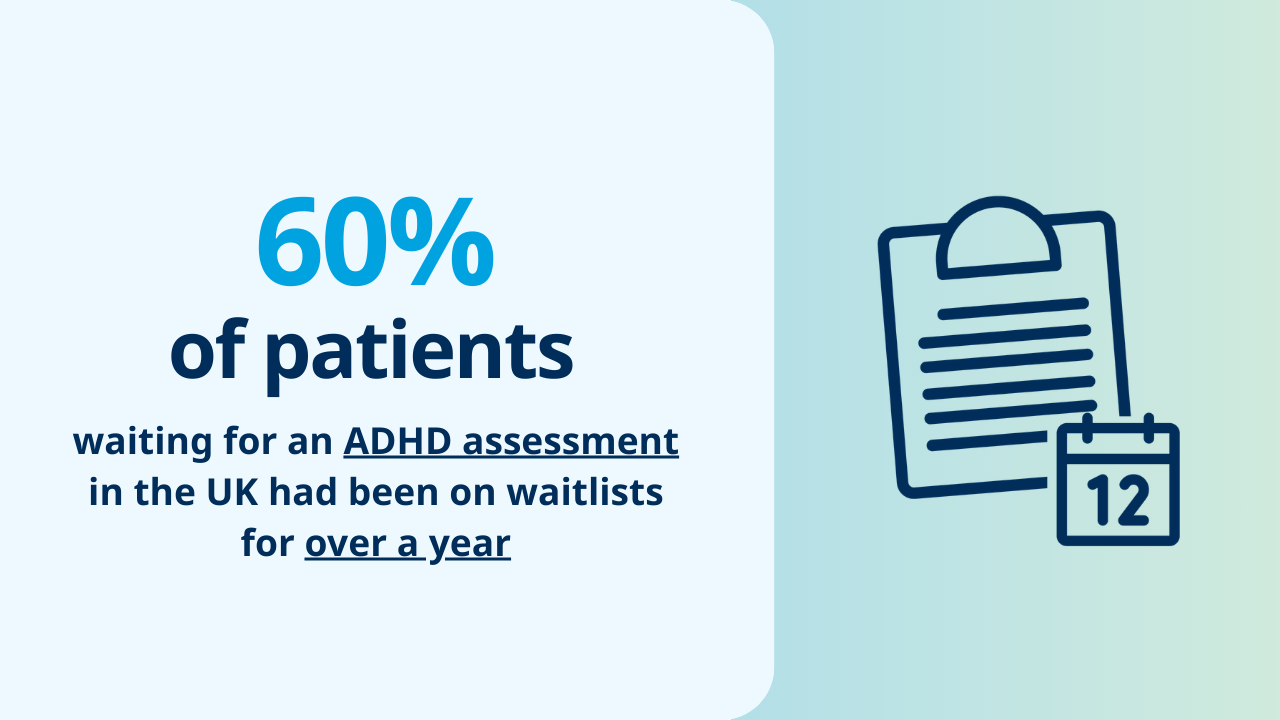
Source: NHS England, September 2025 Survey.
Assessing and treating more ADHD patients in primary care has been identified as a solution to long waitlists in specialist ADHD services. However, many GPs report having low confidence, limited knowledge, and often misconceptions about ADHD.
To make assessment and treatment of ADHD patients in primary care settings a reality, precision-based workflows are necessary. Such models aid GPs in diagnosing and caring for patients with greater confidence.
How primary care clinicians can introduce more accurate ADHD care models
When ADHD care is imprecise, assessment quality varies. Clinicians don’t have a consistent baseline of symptoms to inform treatment decisions, and the patient journey often becomes inefficient. To combat this, a more structured and clinically precise approach is necessary.
Can objective ADHD testing help improve diagnostic accuracy and confidence?
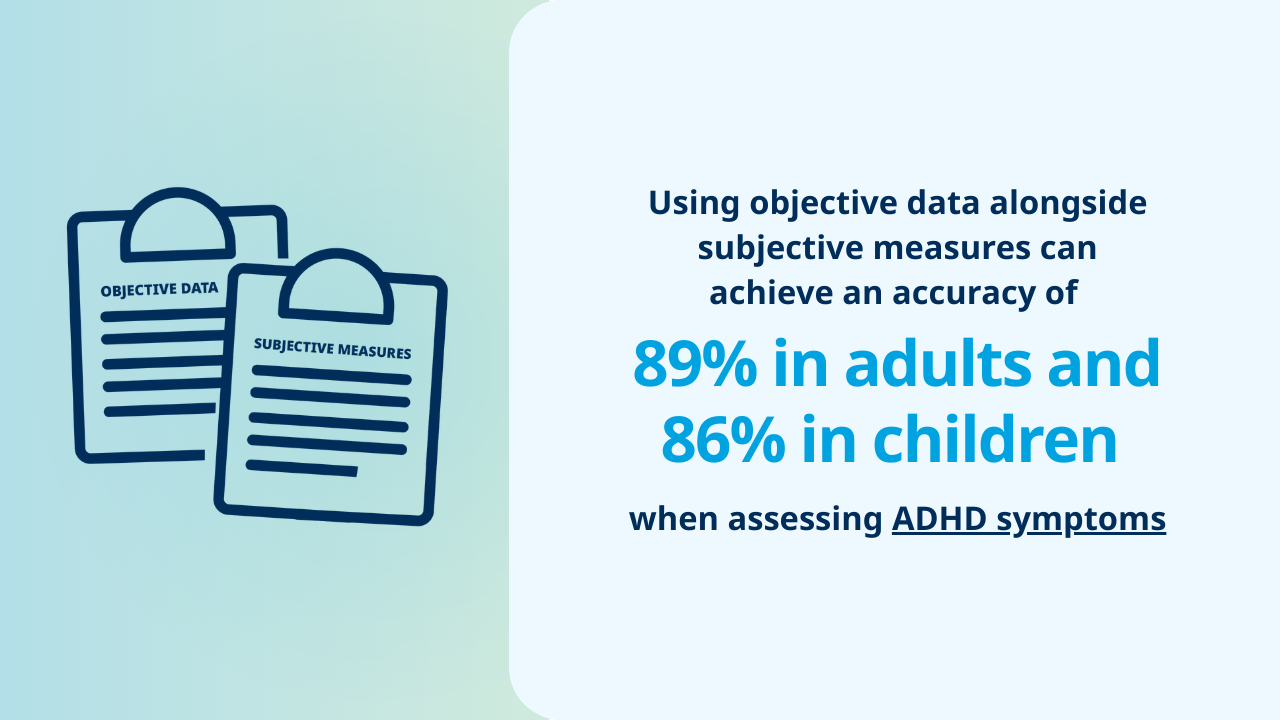
By adding a clinically validated digital ADHD test to your clinical workflow, you can gain objective data on the three core symptoms of ADHD: activity, attention, and impulsivity.
With objective data, you are more likely to reach diagnostic decisions faster, with greater confidence. During treatment, data from digital ADHD tools can help guide medication decisions, monitor dosages, and track symptom change. These gains in precision can help keep more of the responsibility for ADHD management within the primary care setting.
The LEAP project in the Wirral added objective ADHD tools to primary care workflows so GPs and mental health professionals can make assessments without referrals. This allowed lower-risk ADHD patients to be assessed and given results (often in a single visit to their GP) within primary care. Thereby, it helped reduce pressure on secondary care services from referrals.
Why consistent ADHD workflows matter in primary care
The addition of a digital ADHD test can act as a foundation for a more consistent and robust workflow for all patients. Objective data can help reduce uncertainties, supporting you in reaching decisions based on reliable data. Subjective measures, like rating scales, on the other hand, may be vulnerable to responder bias.
With consistency, you can set patient expectations. A consistent, evidence-based workflow helps them have more trust in treatment. Furthermore, patients often favor being seen by an individual clinician, rather than referred between services.
This approach also aligns with the NICE recommendation to incorporate an objective test as part of the diagnosis process for ADHD in those aged 6-17. It also meets the goal set out by the ADHD Taskforce. They recommend ADHD patients receive aid at a primary care level, and specialist services are reserved for more complex cases.
Measure your clinical workflow against the benchmark of ADHD care
Use our benchmarking scorecard in our ADHD clinic of the future benchmark report to self-assess your ADHD care workflow and see how you compare with high-performing clinics.
Case study:
Precision-based objective care in clinical practice
North Staffordshire Child and Adolescent Mental Health Services (CAMHS)introduced objective testing to their clinical workflow. Nurse practitioners are now able to assess ADHD patients who would have previously been referred to specialist services. Following the intervention:
- Wait times have reduced from around 18 months to 12 weeks
- The clinical workflow is more consistent, with all patients assessed on the same methodology
- Assessment, diagnosis, medication, and titration can be handled without referral
- Direct benefits in primary care settings, with dedicated clinics offered in GP surgeries where there are six or more ADHD patients
- Improved relationships with pharmacists in primary care networks led to better monitoring, making ongoing care easier to manage
Frequently asked questions (FAQs)
Q. Can ADHD be diagnosed in primary care in the UK?
Yes. ADHD can be assessed and managed in primary care for many patients, particularly those with lower clinical complexity. Objective data, appropriate training, and clear workflows are key enablers to success. Coupled with the support from guidance such as NICE and the Independent ADHD taskforce, precision in ADHD care is a clinical need, not a want.
Q. Do NICE guidelines support objective ADHD testing?
Yes. NICE guidelines recommend the use of objective tests as part of a comprehensive clinical assessment. Objective testing provides standardized data on core ADHD symptoms: attention, activity, and impulsivity, supporting clinical evaluations. It is recommended to use them alongside subjective data and clinical judgement for people aged 6–17.
Q. What training do GPs need to manage ADHD confidently?
GPs (General Practitioners) need training that focuses on recognising ADHD presentations, using structured assessment models, and interpreting multiple sources of clinical information, including objective data.