
Diagnostic drift can be defined as a gradual misalignment between an initial assessment and a patient’s follow-up care. In ADHD care, when follow-up relies only on subjective self-reports or rating scales, you may be left interpreting treatment response from inconsistent information. Over time, this can make it harder to understand how symptoms and functional impact are really changing.
Using multiple data sources in assessment and monitoring can help reduce diagnostic drift. Let’s learn how.
Why ADHD diagnosis and symptom interpretation can change over time
Even within the same person, experiences of ADHD can vary across the lifespan. This means that how you assess and monitor ADHD is really important for minimizing the risk of diagnostic drift.
How the self-reporting of ADHD symptoms may contribute to diagnosis drift
Subjective measures of ADHD symptoms have always been a core element of testing and diagnosis. However, ADHD patients typically struggle with self-evaluation, with a tendency to overestimate symptoms, but also miss the connection between symptoms and impairment. Additionally, some patients may find assessing symptom improvement after treatment difficult. At each stage of the patient journey, there is the risk that clinical judgment is compromised by the subjectivity of self-assessment.
How differing perspectives between parents, teachers, and patients affect ADHD care
As well as self-reports being vulnerable to subjectivity, drawing on additional external perspectives can introduce the risk of inconsistent data. Data analysis on nearly 8,000 children aged 4-17 found low agreement on hyperactivity and inattention symptoms between parents and teachers.
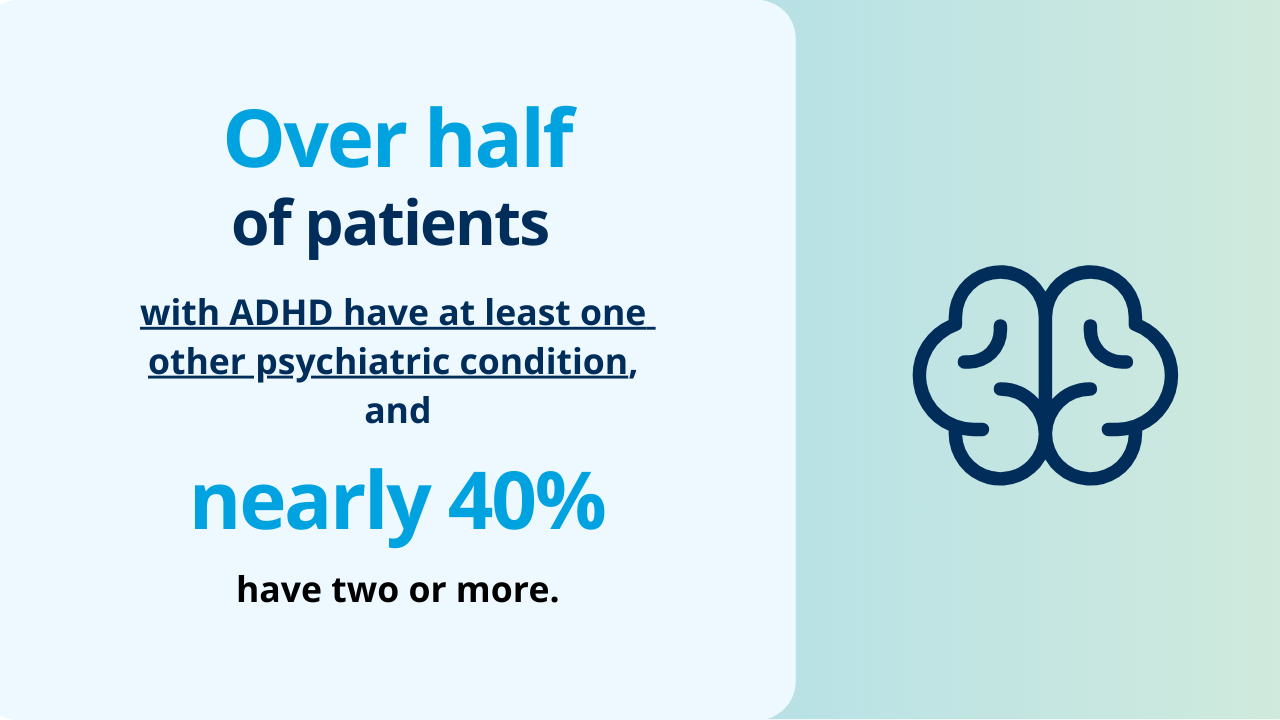
Furthermore, comorbidities such as anxiety, autism spectrum disorder, sleep difficulties, or learning challenges can influence symptom presentation. They make it harder to identify which impairments are caused by ADHD and which come from another condition.
How service pressures can affect ADHD assessment and monitoring
High demand for ADHD services and limited appointment times or follow-ups can make it harder for you and your team to gather enough reliable data. As a result, symptom reporting may gradually diverge from the original diagnostic baseline, increasing the risk of diagnostic drift across both diagnosis and ongoing management.
Impact on diagnosis: If measures of symptoms change over time, it can become unclear whether a patient still meets ADHD diagnostic criteria. Reporting variations makes it difficult for you to judge whether reported changes reflect true differences in ADHD severity or simply differences in patient perception. This could lead to uncertainty, particularly if comorbidities are present or the original diagnosis was borderline.
Impact on management: Diagnostic drift can also make it difficult for you to judge treatment effect. You may find it challenging to assess whether medication, behavioral strategies, or care plans are effective and how best to adjust treatment in the future.
How a multi-modal approach to ADHD assessment helps reduce diagnostic drift
An overreliance on single methodologies, particularly those that are subjective in nature, clearly presents a problem. Individually, no rating scale is adequate for ADHD diagnosis without additional testing methodologies.
To reduce the risk of diagnostic drift, you can incorporate multiple data sources in your ADHD assessments. By adding an objective test to the ADHD workflow, you gain access to objective data on the core symptoms of ADHD, benchmarked against a control population.
Considering the results from an objective test, alongside data from rating scales and clinical interviews, gives you a fuller picture and can lead to a more robust process.
Using multiple data sources to cross-validate ADHD assessments
You can cross-check findings from different sources to make diagnoses less subjective. Inclusion of additional data sources, like objective tools, can help reduce risks during a patient’s ADHD journey.
Identifying inconsistencies in ADHD symptom reporting early on
Symptom reporting can vary between responders, and it’s not uncommon for parents, teachers, and patients to make conflicting observations. Adding a digital assessment with objective reports can help you to identify and isolate any outlying subjective responses before they influence the direction of care.
Interpreting ADHD symptom change over time
Patients’ assessment of ADHD symptom severity can change over time. Using objective data can help you to assess whether symptoms have actually reduced, rather than them being perceived as improvements due to patients adapting or compensating. Correlations between patient reports of quality of life changes and Total Symptom Scores demonstrates how digital ADHD tests can provide increased certainty. The ability to repeat the test and compare results to baseline can help in long-term management of ADHD.
Assessing ADHD symptoms in the presence of comorbidities
A multi-modal ADHD assessment can also help you to identify which symptoms are likely ADHD compared with comorbidities such as ASD.
Differences between ADHD and ASD can often be subtle, including looking at nuances in language and conversation. Adding additional methodologies can support you in this granular diagnostic decision-making process.
"An individual who is autistic may be quite fixed on their own train of thought and they have a sequence of things when they communicate. Whereas with ADHD it is more tangential, so whilst we consider tangential interaction with someone who is autistic, normally it is fixed on a particular topic."
Does using multiple data sources in ADHD assessments align with clinical guidance?
There is strategic support for the adoption of a multi-modal approach to ADHD assessment. Measurement-based care (MBC) uses clinical tools “to objectify the assessment, treatment, and clinical outcomes” of psychiatric patients. An MBC approach can benefit the quality of patient care by improving assessment accuracy, supporting better communication with your patients, and enhancing clinical decision-making.
NICE, in HealthTech guidance HTG729, recommends using an objective test as an option to help with the diagnosis of ADHD in patients aged 6 to 17 years. They highlight that using digital technologies in assessment could aid communication of diagnostic decisions, increase clinical confidence, and speed up diagnostic decision-making.
Measure your clinic's workflow against the rising standards of care in 2026 –
Reducing diagnostic drift through precision in ADHD care
Integrating multiple data sources into ADHD assessment can provide you with a more evidence-based and precise picture of a patient’s symptoms. Precision in ADHD care actively supports your clinical judgment, rather than replacing it, and ultimately leads to better care for patients.