

There is high variability in ADHD treatment responses from one patient to another. Finding effective treatments often involves trial and error. However, this iterative process can be slow and frustrating.
Our guide highlights how adding objective data to your clinical workflow can minimize the reliance on trial-and-error. It also provides you with an actionable framework for integrating objective measures into ADHD care.
How overreliance on subjective measures increases trial and error in ADHD care
You use rating scales and clinical interview feedback to diagnose ADHD and determine treatment response and titration. However, an overreliance on subjective measures at critical stages of the ADHD journey can:
- Introduce responder bias
- Make it difficult to establish a baseline picture of ADHD symptoms
The result is that you may have an unclear picture of ADHD symptoms and treatment impact. You may find yourself repeating processes through trial and error to gain a more accurate assessment, but this is inefficient and leads to a poor patient experience.
How objective measures improve accuracy in ADHD care
When used alongside subjective measures, an objective test can increase the accuracy of ADHD diagnosis to 89.5% in adults and 86.7% in children. Adding digital ADHD tests to your clinic's workflow can reduce the time from assessment to final decision and increase your confidence in clinical decisions.
During titration, objective measures can be more sensitive to physiological changes and help you identify treatment effects earlier.
→ Building structured ADHD workflows to reduce trial-and-error
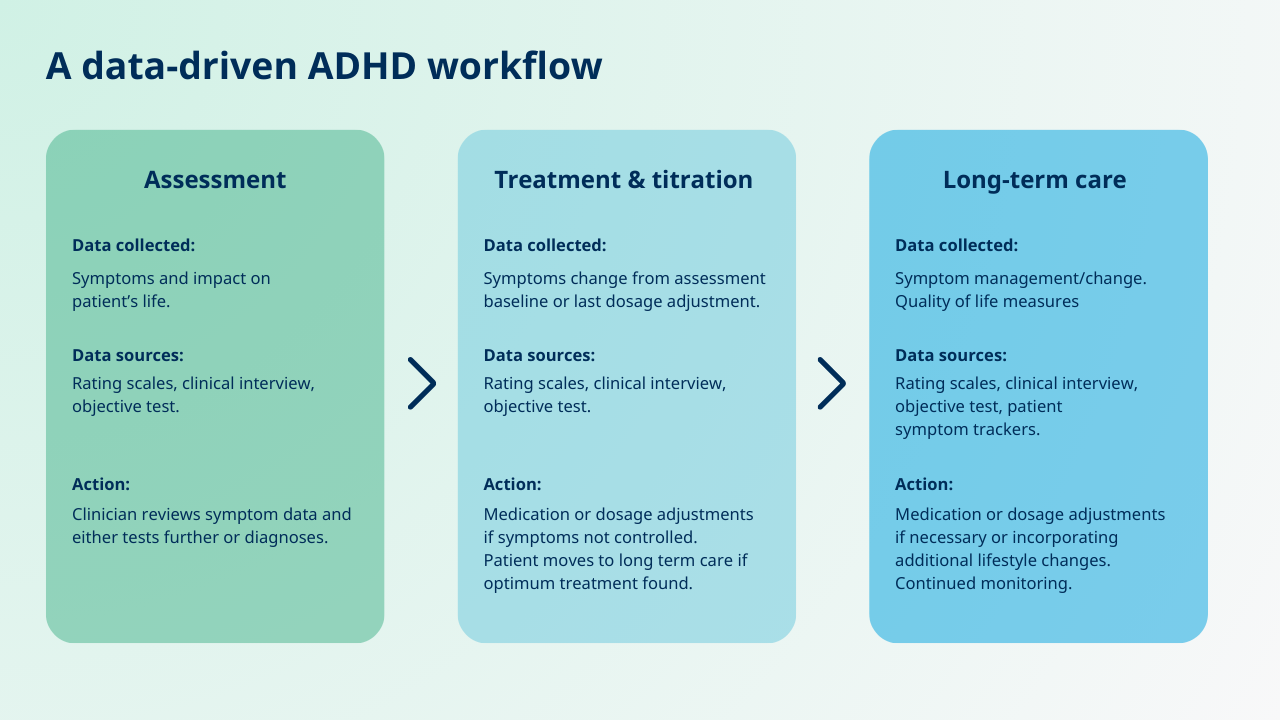
You can combine rating scales, clinical interviews, and data from objective tests in a structured workflow. This defines:
- What data to collect
- When to collect it
- How to act on it
By following a structured workflow, you can provide a consistent, evidence-based approach to ADHD care, which:
- Is standardized
- Is scalable
- Builds patient trust
- Supports the establishment of multidisciplinary teams (MDTs)
→ What a data-driven ADHD workflow looks like across the patient journey
Here’s how you can use objective data to implement a structured workflow and minimize trial-and-error in ADHD care delivery.
Strengthen patient conversations with objective technology
Sharing data from digital ADHD tests can help you build patient trust in your clinical decisions and increase adherence to treatment plans. Thereby, you're reassuring patients that dose changes are based on evidence, and not trial-and-error. Reports from objective tests further help with this by enabling patients to visualize how ADHD symptoms affect them.
Delivering consistent ADHD care with objective data
When you only have patient reports to base clinical decisions on, your clinical judgment can be hindered by the subjectivity of self-assessment. This can lead to experimental ADHD care, where you’re reliant on patient feedback to assess the impact of interventions.
By adding a third component, of objective data, you can triangulate what you know about ADHD symptoms. Combining patient reports with clinical judgment and objective data leads to a clearer picture of symptoms at every stage, from assessment to treatment.
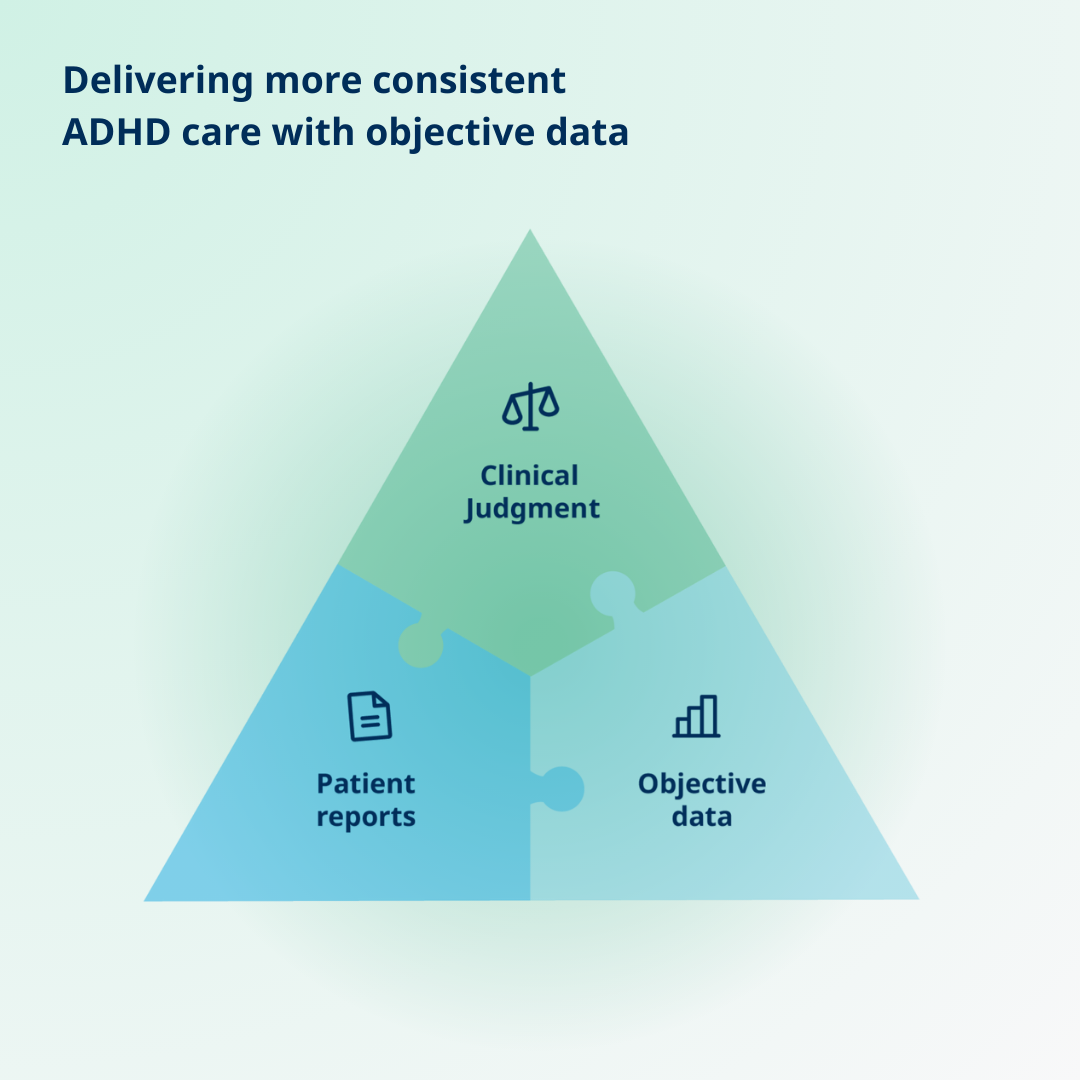
Adding an objective test isn’t about reducing your clinical judgment or sidelining the patient experience, but about enhancing patient care through evidence-based clinical workflows.
ADHD care that meets patient expectations
How does your clinic compare?
ADHD care is changing rapidly, and patient expectations are high. Connect with our expert team to learn how your clinic can keep up with the changing times.